HIV and AIDS: What Every Canadian Should Know in 2026

Share
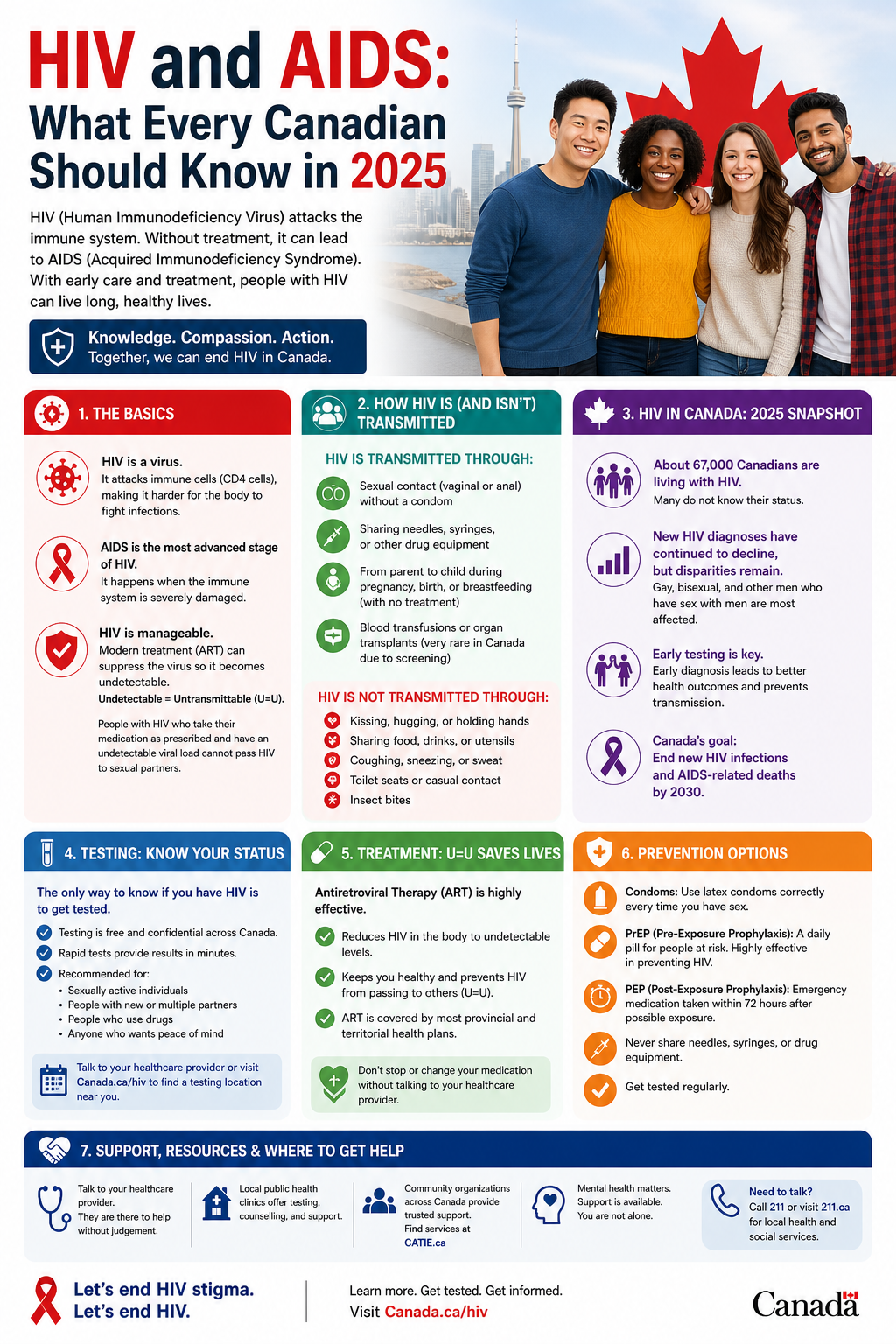
HIV and AIDS are two related but very different conditions that affect millions of people worldwide — including over 62,000 Canadians currently living with HIV. HIV is a virus that attacks your immune system, while AIDS is the most advanced stage of that infection. Understanding the facts can help you protect yourself and support those around you.
Understanding HIV and AIDS: Causes, Symptoms, and Treatment in Canada
The good news is that with early HIV testing in Canada and access to modern antiretroviral treatment, most people diagnosed with HIV can lead long, healthy, and active lives. Canada offers some of the best publicly funded healthcare resources in the world for HIV prevention, diagnosis, and ongoing care — making it more important than ever to stay informed.
What Are HIV and AIDS?
HIV stands for Human Immunodeficiency Virus. It belongs to a group of viruses called retroviruses. HIV targets specific immune cells in your body called CD4 T-cells, which are a type of white blood cell.
These cells are critical. They help your body fight off bacteria, viruses, and other harmful germs. HIV actually multiplies inside these CD4 cells, which makes it very hard for your immune system to destroy the virus on its own.
AIDS stands for Acquired Immunodeficiency Syndrome. It describes the most advanced stage of HIV infection, where the immune system becomes severely weakened. However, because of how effective modern treatment has become, many doctors now prefer the term late-stage HIV instead of AIDS.
It is important to understand that HIV and AIDS are not the same thing. Getting HIV does not automatically mean you will develop AIDS. In fact, people who receive treatment early are very unlikely to ever reach that stage. According to Health Canada, access to antiretroviral therapy has dramatically changed outcomes for people living with HIV across the country.
How Does HIV Spread?
Understanding how HIV spreads is one of the most important steps in preventing infection. There are a few main routes of transmission.
Sexual Transmission
Sexual contact is the most common way HIV spreads. The virus can enter the body through the lining of the vagina, vulva, penis, rectum, or mouth during sex. Both vaginal and anal sex with an HIV-positive partner carry a significant risk.
Oral sex carries a lower risk. However, that risk increases if you have mouth sores, bleeding gums, or a throat infection. You cannot get HIV from saliva, coughing, or sneezing.
Sharing Needles
HIV can spread when people who inject drugs share needles, syringes, or other injection equipment contaminated with infected blood. This is a significant route of transmission in Canada. Many provinces offer needle exchange programmes to help reduce this risk.
Blood Transfusions
In the past, infected blood transfusions caused a number of HIV cases. Today, all blood products in Canada are carefully screened for HIV before use. As a result, this route of transmission is now extremely rare here.
From Mother to Child
A mother living with HIV can pass the virus to her baby during pregnancy, childbirth, or breastfeeding. However, with proper antiretroviral treatment during pregnancy, the risk of passing HIV to the baby drops to less than 1 in 100.
This means the vast majority of babies born to HIV-positive mothers will not have HIV — as long as the mother receives appropriate care. Delivery by caesarean section can further reduce the risk. If infant formula is available, HIV-positive mothers are advised not to breastfeed.
What Are the Symptoms of HIV and AIDS?
Symptoms of HIV and AIDS vary depending on the stage of infection. Knowing what to look for can help you seek care sooner.
Primary HIV Infection
When you first become infected with HIV, this is called a primary infection. About 8 out of 10 people develop symptoms at this stage. The most common symptoms — sometimes called the classic triad — are a sore throat, a high fever, and a red rash.
Other symptoms may include:
- Swollen glands
- Headaches
- Fatigue
- Diarrhoea
- General aches and pains
These symptoms can last up to three weeks. They are often mistaken for the flu or a mild viral illness, which is one reason many people do not realise they have been infected.
After the Primary Infection
After the initial infection, many people have no symptoms at all for several years. This does not mean the virus is gone. HIV continues to multiply quietly in the body, and CD4 T-cell counts slowly drop over time.
During this period, HIV can still be passed to others. Some people may notice persistently swollen lymph nodes or experience night sweats. Early testing is the only reliable way to know your status.
For more detailed information on HIV stages, the Mayo Clinic’s HIV/AIDS overview is an excellent resource.
Late-Stage HIV (AIDS) Symptoms
Late-stage HIV, formerly called AIDS, occurs when the immune system becomes severely damaged. People who receive treatment for HIV do not typically reach this stage.
A person at this stage generally has:
- A very low CD4 T-cell count
- One or more serious infections, such as pneumonia, severe oral or vaginal thrush, fungal infections, or tuberculosis (TB)
- An increased risk of certain cancers, including Kaposi’s sarcoma, cervical cancer, and lymphoma
- Possible HIV-related brain disease affecting memory and thinking
Furthermore, Kaposi’s sarcoma is a type of cancer found almost exclusively in people with very advanced HIV infection. It causes lesions on the skin and in other parts of the body.
How Is HIV Treated in Canada?
Treatment for HIV has improved enormously over the past few decades. Today, the standard treatment is called antiretroviral therapy (ART). It involves taking a combination of medications that prevent the virus from multiplying in your body.
ART does not cure HIV. However, it keeps the virus at very low — sometimes undetectable — levels in the blood. As a result, people living with HIV who take their medication consistently can have a near-normal life expectancy.
Most provincial health plans in Canada cover antiretroviral medications, though coverage details vary by province. Your family doctor or an infectious disease specialist can help you navigate your options. The World Health Organization’s HIV fact sheet also provides useful global context on treatment access.
Treatment can also have side effects, which vary from person to person. These might include nausea, fatigue, headaches, or changes in body composition. Your healthcare provider can help manage these effects and adjust your treatment plan if needed.
HIV Prevention in Canada
Preventing HIV is very possible with the right knowledge and tools. Here are the most effective prevention strategies available to Canadians.
- Use condoms consistently during vaginal, anal, and oral sex
- Get tested regularly, especially if you have multiple sexual partners
- Ask about PrEP — Pre-Exposure Prophylaxis is a daily medication that can prevent HIV in people who are HIV-negative but at high risk. It is available in Canada and covered under many provincial drug plans
- Use PEP — Post-Exposure Prophylaxis is an emergency medication taken within 72 hours of a possible HIV exposure
- Never share needles or drug injection equipment
- If pregnant, get tested for HIV early in your pregnancy so treatment can begin right away if needed
Many sexual health clinics and walk-in clinics across Canada offer free or low-cost HIV testing and access to PrEP. You do not always need a referral.
When to See a Doctor
You should speak with your family doctor or visit a walk-in clinic if you think you may have been exposed to HIV, even if you feel completely fine. Remember, many people have no symptoms for years.
You should also seek care if you notice:
- A sudden fever, rash, and sore throat that appear together
- Unexplained weight loss
- Persistent night sweats
- Swollen glands that do not go away
- Recurring infections that do not clear up normally
Getting tested is a simple, confidential process. Many provincial health programmes offer anonymous HIV testing. Your family doctor can order a test, or you can visit a sexual health centre or walk-in clinic near you. Early diagnosis truly saves lives, so please do not delay seeking care.
Always consult your doctor or a qualified healthcare provider for personal medical advice. This article is intended for general information only.
Frequently Asked Questions About HIV and AIDS
What is the difference between HIV and AIDS?
HIV is the virus that causes infection, while AIDS is the most advanced stage of that infection. Not everyone with HIV develops AIDS. With early treatment, most people living with HIV never reach the AIDS stage.
Can you live a normal life with HIV in Canada?
Yes. With modern antiretroviral therapy, most people living with HIV in Canada can expect a near-normal lifespan and quality of life. Many provincial health plans cover HIV medications, making treatment accessible across the country.
How soon do HIV symptoms appear after infection?
Most people develop initial symptoms of HIV within two to four weeks of infection. These early symptoms — fever, rash, and sore throat — often resemble the flu and may last up to three weeks before fading.
Is HIV testing free in Canada?
HIV testing is widely available across Canada and is covered under most provincial health plans. You can get tested through your family doctor, a walk-in clinic, or a sexual health centre — often without a referral.
Can HIV be transmitted through kissing or casual contact?
No. HIV cannot be transmitted through saliva, kissing, hugging, shaking hands, coughing, or sneezing. HIV and AIDS are spread only through specific bodily fluids like blood, semen, vaginal fluid, and breast milk.
What is PrEP and is it available in Canada?
According to Government of Canada’s official HIV and AIDS resources, this information is supported by current medical research.
For more information, read our guide on best extracurricular activities for children with ADHD.
PrEP (Pre-Exposure Prophylaxis) is a daily medication that significantly reduces the risk of getting HIV for people who are HIV-negative. It is available in Canada and covered by several provincial drug benefit programmes — ask your doctor if it is right for you.
Key Takeaways
- HIV and AIDS are not the same. HIV is the virus; AIDS is the most advanced stage of infection.
- HIV is most commonly spread through unprotected sexual contact, sharing needles, or from mother to child during pregnancy or birth.
- Early symptoms often look like the flu — fever, rash, and sore throat — and can be easy to miss.
- Antiretroviral therapy (ART) allows people living with HIV to lead long, healthy lives. Most provincial health plans in Canada help cover the cost.
- Prevention tools like condoms, PrEP, and PEP are all accessible in Canada through your family doctor, walk-in clinics, or sexual health centres.
- Get tested if you think you may have been exposed. Testing is simple, confidential, and often free under your provincial health plan.
- Always talk to your doctor for personalised advice about your sexual health and HIV risk.

About the Author
Dr. Sarah Mitchell, MDDr. Sarah Mitchell is a board-certified family physician with over 15 years of clinical experience. She completed her MD at the University of Toronto and her residency at Toronto General Hospital. Dr. Mitchell specializes in preventive medicine and chronic disease management. She is a member of the College of Family Physicians of Canada (CFPC) and has published over 30 peer-reviewed articles on preventive health care.
View all articles →