AIDS-Related Lymphoma: Symptoms, Diagnosis & Treatment

Share

Dr. James Okafor, MD, PhD
Dr. James Okafor holds an MD and PhD in Neurological Sciences from…
AIDS-related lymphoma is a serious type of cancer that develops in the lymphatic system of people living with AIDS, and understanding it is essential for early detection and effective care. It remains one of the most significant complications associated with advanced HIV infection, and Canadians living with HIV should be aware of the warning signs, diagnostic steps, and treatment pathways available across the country.
What Is AIDS-Related Lymphoma and Who Is at Risk?
In Canada, people diagnosed with HIV have access to publicly funded healthcare through provincial health plans, but navigating an HIV lymphoma symptoms diagnosis can still feel overwhelming. This guide breaks down what AIDS-related lymphoma is, how doctors in Canada identify it, and the latest treatment options — empowering you to take the right steps toward getting help.
What Is AIDS-Related Lymphoma?
AIDS stands for Acquired Immune Deficiency Syndrome. It is caused by the Human Immunodeficiency Virus, or HIV. HIV attacks and weakens the body’s immune system, making it harder to fight off infections and disease.
When a person’s immune system is severely damaged by HIV, they may develop certain infections or cancers. At that point, their condition is diagnosed as AIDS. Sometimes, AIDS-related lymphoma is diagnosed at the same time as AIDS itself.
Lymphomas are cancers that affect white blood cells called lymphocytes. These cells are a key part of your immune system. When HIV weakens the immune system, the risk of developing lymphoma increases significantly. Health Canada recognizes lymphoma as one of the AIDS-defining cancers linked to advanced HIV infection.
Understanding the Lymphatic System
To understand AIDS-related lymphoma, it helps to know how the lymphatic system works. This system plays a major role in your body’s defence against illness.
The lymphatic system includes several important parts:
- Lymph fluid: A clear, watery fluid that carries white blood cells (lymphocytes) through the body. These cells fight infection and slow tumour growth.
- Lymph vessels: A network of thin tubes that collect lymph fluid from different parts of the body and return it to the bloodstream.
- Lymph nodes: Small, bean-shaped structures that filter lymph fluid and help fight infection. They are found throughout the body, including the neck, armpits, chest, abdomen, and groin.
- Spleen: An organ on the left side of the abdomen that produces lymphocytes, filters the blood, and removes old blood cells.
- Thymus: A gland in the chest, behind the breastbone, where lymphocytes grow and multiply.
- Tonsils: Two small masses of lymph tissue at the back of the throat that also produce lymphocytes.
- Bone marrow: The soft, spongy tissue inside large bones. It produces white blood cells, red blood cells, and platelets.
Cancer can develop in any of these areas. In AIDS-related lymphoma, cancer most often starts in the lymph nodes or bone marrow.
Types of AIDS-Related Lymphoma
There are two main categories of lymphoma: Hodgkin lymphoma and non-Hodgkin lymphoma. Both can occur in people with AIDS. However, non-Hodgkin lymphoma is far more common in this group.
AIDS-related lymphomas tend to grow and spread quickly. They are often described as aggressive. According to the Mayo Clinic, aggressive lymphomas require prompt treatment to slow their progression.
The Three Main Types of AIDS-Related Lymphoma
Doctors currently recognize three specific types of AIDS-related lymphoma:
- Diffuse large B-cell lymphoma: The most common type. It grows quickly and involves large, abnormal B-cells.
- Immunoblastic lymphoma: Another B-cell lymphoma. It is also fast-growing and tends to be more difficult to treat.
- Small non-cleaved cell lymphoma: This type includes Burkitt lymphoma. It is highly aggressive and spreads rapidly.
All three types are considered aggressive. Therefore, early detection and treatment are very important for better outcomes.
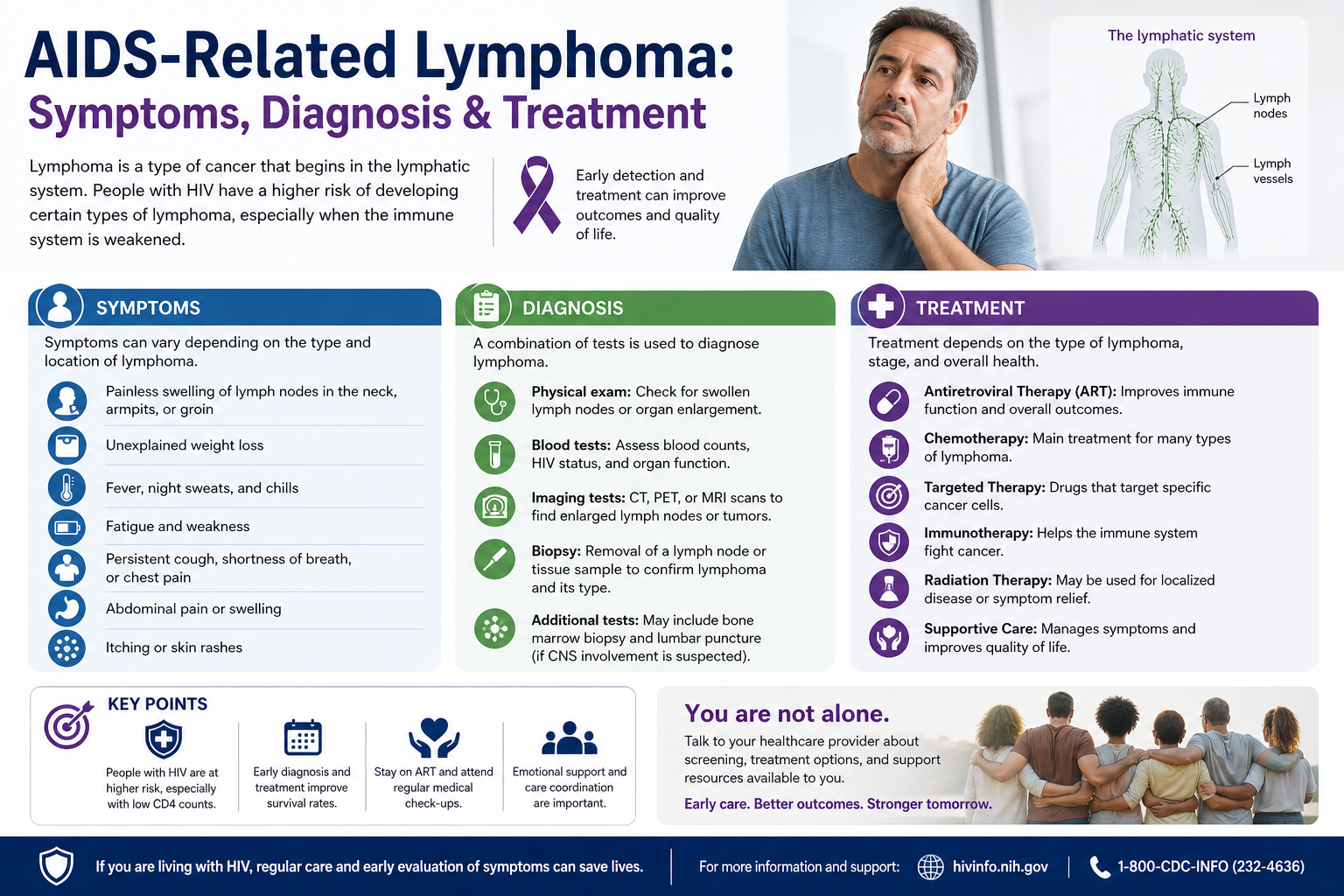
Symptoms of AIDS-Related Lymphoma
The symptoms of AIDS-related lymphoma can be easy to overlook at first. Many of them resemble other common illnesses. However, if you are living with HIV, it is important to take these signs seriously.
Common symptoms include:
- Unexplained weight loss
- Fever with no clear cause
- Night sweats that soak through clothing or bedding
- Painless swelling of lymph nodes in the neck, chest, armpits, or groin
- A feeling of fullness or pressure below the ribs
These symptoms are sometimes called “B symptoms” in the medical world. They are important warning signs. In addition, other conditions can cause similar symptoms, so getting a proper diagnosis is essential.
How AIDS-Related Lymphoma Is Diagnosed
Doctors use several tests to find and confirm AIDS-related lymphoma. Your family doctor or specialist will likely order a combination of these tests based on your symptoms and health history.
Physical Exam and Health History
Your doctor will start with a full physical exam. They will check for swollen lymph nodes, unusual lumps, or other signs of illness. They will also review your medical history, including any past infections or treatments related to HIV.
Blood Tests
A complete blood count (CBC) is a standard blood test. It measures the number of red blood cells, white blood cells, and platelets in your blood. It also checks haemoglobin levels and the ratio of red blood cells in your sample.
Your doctor may also order an HIV test to check for HIV antibodies in your blood. A CD4 cell count is another important test. CD4 cells are a type of white blood cell. A low CD4 count suggests your immune system is significantly weakened.
Lymph Node Biopsy
A biopsy is the most reliable way to confirm lymphoma. Your doctor removes all or part of a lymph node and examines the tissue under a microscope to look for cancer cells.
There are several types of biopsies:
- Excisional biopsy: The entire lymph node is removed for examination.
- Incisional biopsy: Only part of the lymph node is removed.
- Fine needle aspiration: A thin needle is used to draw a small tissue sample from a lymph node.
Bone Marrow Biopsy
In this test, a doctor inserts a needle into the hip bone or breastbone to collect a small sample of bone and marrow. A pathologist then examines the sample under a microscope to check for cancer cells.
Chest X-Ray
A chest X-ray lets doctors see the organs inside your chest. It can reveal enlarged lymph nodes or other abnormalities in the chest area.
Epstein-Barr Virus (EBV) Test
Some AIDS-related lymphomas are linked to the Epstein-Barr virus. A blood or tissue test can measure EBV antibody levels. High levels may suggest an active EBV infection, which can contribute to lymphoma development in people with HIV.
Factors That Affect Prognosis and Treatment
The outlook for someone with AIDS-related lymphoma depends on several factors. Your doctor will consider all of these when planning your care.
Key factors include:
- The stage of the cancer at diagnosis (how far it has spread)
- Your CD4 cell count at the time of diagnosis
- Whether you have had other AIDS-defining infections in the past
- Your overall ability to carry out daily activities
Furthermore, how well HIV is controlled with antiretroviral therapy (ART) plays a major role. People whose HIV is well managed with medication tend to respond better to lymphoma treatment. The World Health Organization notes that effective ART has significantly improved health outcomes for people living with HIV worldwide.
Treatment Options for AIDS-Related Lymphoma
Treatment for AIDS-related lymphoma is complex. It must address both the lymphoma and the underlying HIV infection at the same time. Your care team will likely include an oncologist (cancer specialist) and an HIV specialist working together.
Chemotherapy
Chemotherapy is the main treatment for most types of AIDS-related lymphoma. It uses powerful drugs to kill cancer cells or stop them from growing. The specific drugs and dosages used will depend on the type and stage of lymphoma, as well as your overall health.
Chemotherapy can be given in a hospital, a cancer treatment centre, or sometimes at home, depending on your situation and your provincial health plan coverage.
Antiretroviral Therapy (ART)
Continuing or starting antiretroviral therapy during lymphoma treatment is very important. ART keeps HIV under control and helps protect your immune system. A stronger immune system gives your body a better chance of responding well to chemotherapy.
However, some ART medications can interact with chemotherapy drugs. Your care team will carefully manage both treatments to reduce risks.
Radiation Therapy
Radiation therapy uses high-energy rays to target and destroy cancer cells in a specific area. It is not always the first choice for AIDS-related lymphoma, but it may be used in certain cases, for example, when lymphoma affects the brain or spinal cord.
Stem Cell Transplant
In some cases, a stem cell transplant may be considered after chemotherapy. This procedure replaces damaged bone marrow with healthy stem cells. It is typically offered to patients who are otherwise in good health and whose lymphoma has responded to initial treatment.
Clinical Trials
Clinical trials test new treatments or combinations of existing ones. Canadians living with HIV-related cancers may be eligible to join trials through major cancer centres across the country. Ask your specialist or family doctor whether a clinical trial might be right for you.
When to See a Doctor
If you are living with HIV and notice any of the symptoms described above, do not wait. Contact your family doctor as soon as possible. If you do not have a family doctor, visit a walk-in clinic or an HIV specialty clinic in your area.
Early detection of AIDS-related lymphoma can make a real difference in your treatment options. You should seek care right away if you experience:
- Unexplained weight loss or persistent fever
- Soaking night sweats for more than a few days
- Painless but growing lumps in your neck, armpits, or groin
- A feeling of pressure or fullness under your ribs
Most provincial health plans in Canada cover HIV-related care, including specialist referrals and diagnostic testing. Your family doctor can refer you to the right specialist quickly. As always, speak with your doctor before making any decisions about your health. This article is for informational purposes only and does not replace professional medical advice.
Frequently Asked Questions About AIDS-Related Lymphoma
What is AIDS-related lymphoma?
AIDS-related lymphoma is a type of cancer that develops in the lymphatic system of people living with AIDS. It occurs because HIV weakens the immune system, making the body less able to prevent abnormal cell growth. It is most commonly a form of non-Hodgkin lymphoma.
What are the early symptoms of AIDS-related lymphoma?
Early symptoms of AIDS-related lymphoma include unexplained weight loss, persistent fever, and night sweats. You may also notice painless swelling of lymph nodes in the neck, armpits, or groin. If you have HIV and experience any of these symptoms, see your doctor right away.
How is AIDS-related lymphoma treated in Canada?
In Canada, AIDS-related lymphoma is most commonly treated with chemotherapy combined with antiretroviral therapy (ART) to manage HIV at the same time. Treatment is typically covered under provincial health plans and is coordinated through cancer centres and HIV specialists. Your family doctor can refer you to the appropriate care team.
Is AIDS-related lymphoma curable?
The outlook for AIDS-related lymphoma depends on the type, stage, and how well HIV is being managed. Some people respond very well to treatment, especially when HIV is controlled with ART. However, because these lymphomas are often aggressive, early diagnosis and treatment are key to the best possible outcome.
How does HIV increase the risk of lymphoma?
HIV damages the immune system by destroying CD4 white blood cells, which are essential for fighting infections and controlling abnormal cell growth. As the immune system weakens, the body becomes less able to prevent cancer cells from developing. This is why people with advanced HIV infection have a significantly higher risk of developing AIDS-related lymphoma.
What is the difference between Hodgkin and non-Hodgkin lymphoma in AIDS patients?
According to Public Health Agency of Canada’s HIV/AIDS resources, this information is supported by current medical research.
For more information, read our guide on activities that support children’s health and well-being.
Both types can occur in people with AIDS, but non-Hodgkin lymphoma is far more common and is the type specifically classified as AIDS-related lymphoma. Non-Hodgkin lymphomas in AIDS patients tend to be aggressive and fast-growing. Hodgkin lymphoma can also occur with HIV but is less frequently classified as an AIDS-defining cancer.
Key Takeaways
- AIDS-related lymphoma is a cancer of the lymphatic system that develops in people with AIDS, most often as non-Hodgkin lymphoma.
- HIV weakens the immune system, which raises the risk of developing lymphoma and other cancers.
- Common symptoms include unexplained weight loss, fever, night sweats, and painless swelling of lymph nodes.

About the Medical Reviewer
Dr. James Okafor, MD, PhDDr. James Okafor holds an MD and PhD in Neurological Sciences from McGill University. With 12 years of experience in clinical neurology and mental health research, he has contributed to landmark studies on depression, anxiety, and cognitive health. Dr. Okafor is a Fellow of the Royal College of Physicians and Surgeons of Canada and serves on the editorial board of two peer-reviewed journals.
View all articles →