Mammogram Canada: What It Is & Why You Need One

Share
A mammogram in Canada is one of the most important screening tools available for detecting breast cancer early. It uses low-dose X-rays to produce detailed images of breast tissue, allowing doctors to identify potential problems long before symptoms develop. For Canadian women over 40, scheduling a regular mammogram could be one of the most impactful health decisions you ever make.
Why Getting a Mammogram in Canada Could Save Your Life
Breast cancer screening in Canada is a critical part of preventive healthcare. According to Health Canada, breast cancer remains the most commonly diagnosed cancer among Canadian women, making timely detection essential. This guide explains everything you need to know — from what to expect during the procedure and how to prepare, to understanding your results and knowing when to book your next appointment.
What Is a Mammogram?
| Type of Mammogram | Description | Who It’s For | Key Considerations |
|---|---|---|---|
| Screening Mammogram | Routine X-ray of the breast taken in two views to detect early signs of breast cancer before symptoms appear | Women aged 50–74 (provincially funded across Canada); some provinces screen from age 40 | Recommended every 1–2 years depending on provincial guidelines; covered under most provincial health plans |
| Diagnostic Mammogram | More detailed X-ray used to investigate a specific concern such as a lump, pain, or abnormal screening result | Women with breast symptoms or an abnormal screening mammogram result | May involve additional views or imaging; typically requires a physician referral in most provinces |
| 3D Mammogram (Tomosynthesis) | Advanced imaging that takes multiple X-ray images from different angles to create a three-dimensional picture of breast tissue | Women with dense breast tissue or higher-than-average breast cancer risk | Availability varies across Canadian provinces and territories; may not be fully covered by provincial health insurance |
| Baseline Mammogram | A first-time mammogram used to establish a reference image for future comparisons | Women in their 40s or those beginning routine screening for the first time | Helps radiologists detect changes over time; timing should be discussed with a family physician or nurse practitioner |
| High-Risk Screening Mammogram | Enhanced surveillance program combining mammography with breast MRI for individuals at elevated risk | Women with BRCA1/BRCA2 gene mutations, strong family history, or prior chest radiation therapy | Available through provincial high-risk screening programs such as Ontario Breast Screening Program (OBSP); requires a referral |
A mammogram is an X-ray of the breast. It is the most important of four standard methods used to detect breast cancer. The other three are breast ultrasound, breast MRI, and guided needle biopsy.
A standard mammogram produces flat, two-dimensional images of breast tissue. However, technology has advanced significantly. 3D mammography, also called tomosynthesis, is now available at many imaging centres across Canada. Think of it like a CT scan of the breast — it captures multiple thin slices of tissue, giving radiologists a much clearer picture.
According to Health Canada, breast cancer is the most commonly diagnosed cancer among Canadian women. Early detection through regular screening saves lives.
Who Should Get a Mammogram and How Often?
Most Canadian provincial health plans recommend that women at average risk start regular mammogram screening at age 40 to 50, depending on the province. Your family doctor can tell you exactly when to start based on your personal health history.
For women at average risk, a mammogram every two years is the general recommendation. However, some women need screening more often. Talk to your doctor if any of the following apply to you:
- You have had breast cancer before.
- You have a family history of breast or ovarian cancer.
- You have previously been diagnosed with a high-risk benign breast condition.
Women under 40 are not usually screened with mammograms. Younger breast tissue tends to be very dense, which makes it harder for X-rays to pass through. As a result, mammograms are less effective in this age group. Breast ultrasound is often used instead for younger women with specific concerns.
How to Prepare for Your Mammogram
A little preparation goes a long way in making your mammogram as comfortable and accurate as possible. Here are some simple steps to follow:
- Bring previous results. Bring any past mammogram films, CDs, or reports to your appointment. Radiologists compare old and new images to spot changes over time.
- Time your appointment well. If you still have menstrual cycles, try to book your mammogram for days 7 to 12 of your cycle — that is, shortly after your period ends. Breasts are less tender during this time.
- Skip deodorant on the day. Do not use solid deodorant, antiperspirant, or cream near your armpits on the day of your test. These products can show up on the images and cause confusion.
- Wear a two-piece outfit. You will need to undress from the waist up, so wearing a top and bottom makes this much easier.
What Happens During a Mammogram?
Many women feel nervous before their first mammogram. Knowing what to expect can help ease that anxiety.
The Procedure Step by Step
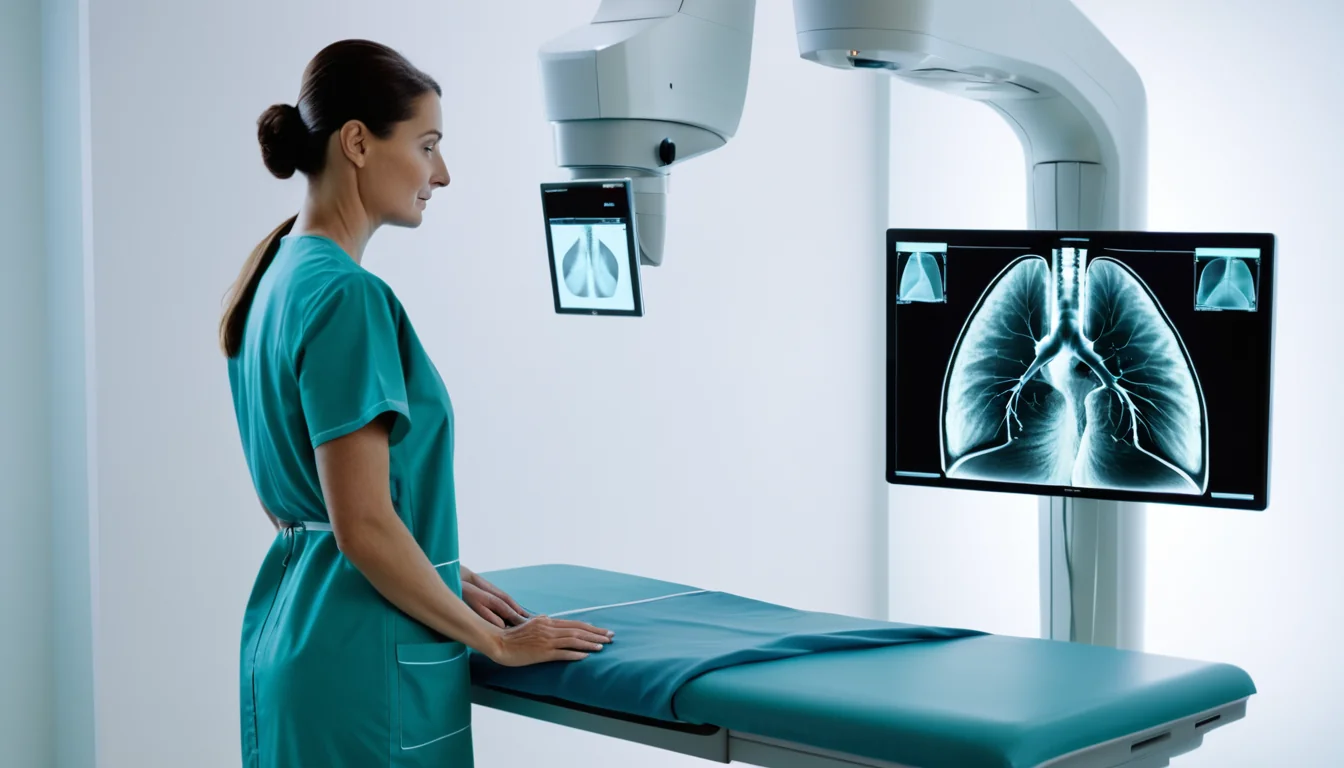
You will stand in front of the mammogram machine, undressed from the waist up. A trained radiology technologist will guide you through the process. Each breast is positioned one at a time on a flat plate. A second plate then gently compresses the breast from above.
The compression lasts only about 5 to 10 seconds. It is necessary for two important reasons: it reduces the radiation dose needed, and it produces clearer, sharper images. Most women feel some pressure or discomfort during this brief moment, but it passes quickly.
Two images are typically taken of each breast, from different angles. In some cases, extra views may be needed. The whole visit usually takes about 30 minutes from start to finish.
Does a Mammogram Hurt?
Discomfort varies from woman to woman. Some feel very little. Others find the compression quite uncomfortable, especially if their breasts are tender. However, the discomfort lasts only seconds. Try to relax your chest muscles as much as possible — it genuinely helps. Furthermore, scheduling your appointment after your period, when breasts are less sensitive, can make a real difference.
Understanding Your Mammogram Results: The BIRADS Score
After your mammogram, a radiologist who specialises in breast imaging will review your images. Your results will include a BIRADS score. This stands for Breast Imaging Reporting and Data System. It was developed by the American College of Radiology and is used by radiologists in Canada and around the world.
The BIRADS system gives every mammogram result a number from 0 to 6. This number tells your doctor how concerned they should be and what to do next. Here is what each score means:
- BIRADS 0: The images were not clear enough for a final result. Additional imaging is needed.
- BIRADS 1: Normal. No abnormalities were found.
- BIRADS 2: A finding was seen, but it is clearly benign (non-cancerous). No further action needed.
- BIRADS 3: A finding that is very likely benign, with less than a 2% chance of being cancer. A follow-up in 6 months is recommended to make sure it does not change.
- BIRADS 4: A finding with uncertain features. The risk of cancer ranges from 2% to 95%. A biopsy is recommended to get a definitive answer.
- BIRADS 5: A finding that is highly suspicious for cancer — over 95% risk. A biopsy is required right away.
- BIRADS 6: Cancer has already been confirmed by a previous biopsy, but surgery has not yet been performed.
It is important to remember that a BIRADS 3 or 4 result does not mean you have cancer. It simply means your doctor wants a closer look. In addition, Mayo Clinic explains that many women who are called back after a mammogram do not end up having cancer.
How Accurate Is a Mammogram?
Like any medical test, a mammogram is not 100% accurate. It can occasionally miss a cancer (called a false negative) or suggest a problem that turns out to be nothing (called a false positive). However, it remains the most effective screening tool for breast cancer in women at average risk.
3D mammography (tomosynthesis) has been shown to improve detection rates and reduce unnecessary call-backs. Ask your imaging centre whether this option is available to you. The World Health Organization confirms that mammogram screening programmes significantly reduce breast cancer deaths when done regularly.
Is the Radiation from a Mammogram Safe?
This is a very common concern, and it is completely understandable. The good news is that the radiation dose used in a mammogram is very low. Studies consistently show that the risk of developing cancer from mammogram radiation is far smaller than the benefit of detecting an existing cancer early.
To put it in perspective, the radiation from a mammogram is similar to the natural background radiation you receive from the environment over a few months. Therefore, the benefits of regular screening far outweigh the very small risk.
When to See a Doctor or Book a Mammogram
You do not need to wait for a symptom to get a mammogram. In fact, the whole point of screening is to find problems before symptoms develop. That said, certain signs mean you should see your family doctor or visit a walk-in clinic right away — do not wait for your next scheduled screening.
Book an appointment promptly if you notice any of the following:
- A new lump or thickening in your breast or underarm area.
- Changes in the size or shape of your breast.
- Skin changes such as dimpling, redness, or a texture that looks like orange peel.
- Nipple discharge, especially if it is bloody.
- A nipple that has recently turned inward.
Your family doctor can refer you for a diagnostic mammogram and other tests. If you do not have a family doctor, a walk-in clinic can assess your symptoms and arrange imaging through your provincial health plan. Most provinces cover mammogram screening at no cost for women in the recommended age group — check with your provincial health authority for the details in your area.
At what age should Canadian women start getting a mammogram?
Most Canadian provincial guidelines recommend starting regular mammogram screening between ages 40 and 50, depending on your province and personal risk level. Women with a family history of breast cancer may be advised to start earlier. Ask your family doctor what is right for you.
How often should you get a mammogram?
For women at average risk, a mammogram every two years is the standard recommendation across most of Canada. Women at higher risk — for example, those with a family history of breast or ovarian cancer — may need annual screening. Your doctor will help you determine the right schedule.
Does a mammogram hurt?
A mammogram involves brief compression of the breast, which can cause discomfort for 5 to 10 seconds. Most women describe it as pressure rather than pain. Booking your appointment shortly after your period, when breasts are less tender, can help reduce discomfort.
Is a mammogram covered by provincial health plans in Canada?
In most Canadian provinces, screening mammograms for women in the recommended age group are covered at no cost through provincial health plans. Coverage details vary by province, so check with your local health authority or ask your family doctor for a referral.
What is the difference between a screening mammogram and a diagnostic mammogram?
A screening mammogram is done routinely when you have no symptoms, with the goal of detecting cancer early. A diagnostic mammogram is done when you or your doctor has noticed a specific concern, such as a lump or nipple discharge. Diagnostic mammograms are more detailed and may include extra images or additional tests.
What does it mean if I am called back after a mammogram?
Being called back after a mammogram is more common than most people realise, and it does not mean you have cancer. It usually means the radiologist wants a clearer image or a closer look at a specific area. Many call-backs result in a normal finding after additional imaging.
Key Takeaways
- A mammogram is an X-ray of the breast used to screen for and diagnose breast cancer.
- Most Canadian women at average risk should get a mammogram every two years starting at age 40 to 50.
- 3D mammography (tomosynthesis) offers improved image quality and is available at many Canadian imaging centres.
- Prepare for your appointment by bringing past results, avoiding deodorant, and wearing a two-piece outfit.
- Your results will include a BIRADS score from 0 to 6, which guides your doctor on what to do next.
- The radiation dose from a mammogram is very low, and the benefits of screening far outweigh the risks.
- If you notice any new breast changes, see your family doctor or visit a walk-in clinic promptly — do not wait for your next scheduled screening.
According to Health Canada’s breast cancer screening guidelines, this information is supported by current medical research.
For more information, read our guide on understanding routine screening tests like protein in urine.
This article is for informational purposes only and does not replace professional medical advice. Always speak with your family doctor or a qualified healthcare provider about your personal screening needs and any concerns you may have about your breast health.
Frequently Asked Questions
What is a mammogram in Canada?
A mammogram in Canada is a low-dose X-ray screening used to detect breast cancer early, often before symptoms appear. It produces detailed images of breast tissue that radiologists analyze for abnormalities. Most provincial health plans cover mammograms for eligible women, typically starting at age 40 to 50 depending on the province.
What are the signs that you need a mammogram Canada screening immediately?
You should seek immediate mammogram screening in Canada if you notice a new breast lump, unexplained breast pain, nipple discharge, skin dimpling, or changes in breast size or shape. These warning signs do not always indicate cancer, but prompt imaging helps rule out serious conditions and ensures early, more effective treatment.
How does a mammogram detect breast cancer?
A mammogram uses low-dose X-rays to capture images of breast tissue, revealing dense masses, calcifications, or irregularities that may indicate cancer. A radiologist reviews the images for suspicious areas. Early detection through mammography significantly improves survival rates by identifying tumours before they grow large or spread to surrounding tissue.
Can you prevent breast cancer with regular mammogram screenings?
Mammograms do not prevent breast cancer but are essential for early detection, which dramatically improves treatment outcomes. Preventive strategies include maintaining a healthy weight, limiting alcohol, exercising regularly, and breastfeeding if possible. Women with high genetic risk may discuss preventive medications or surgery with their Canadian healthcare provider.
When should I see a doctor about scheduling a mammogram?
See your doctor immediately if you feel a new breast lump, notice unusual nipple changes, or have a strong family history of breast cancer. In Canada, most guidelines recommend discussing routine mammogram screening starting at age 40 to 50. High-risk individuals may need earlier or more frequent imaging based on physician assessment.

About the Author
Dr. James Okafor, MD, PhDDr. James Okafor holds an MD and PhD in Neurological Sciences from McGill University. With 12 years of experience in clinical neurology and mental health research, he has contributed to landmark studies on depression, anxiety, and cognitive health. Dr. Okafor is a Fellow of the Royal College of Physicians and Surgeons of Canada and serves on the editorial board of two peer-reviewed journals.
View all articles →