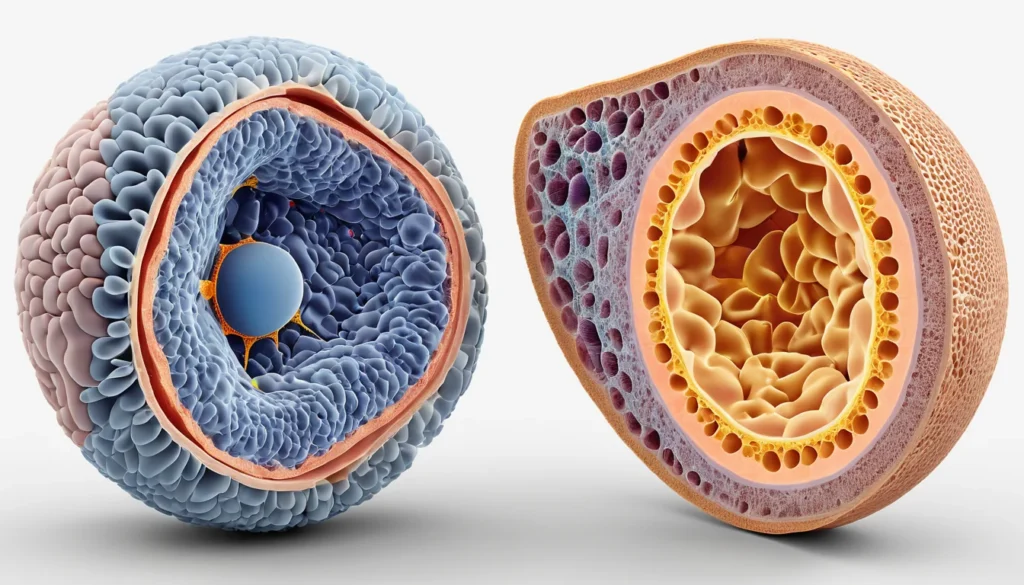
Prostate disease is one of the most serious health concerns facing Canadian men today, affecting thousands across the country each year. Whether it involves a non-cancerous enlargement or a cancer diagnosis, problems with the prostate gland can significantly impact quality of life, urinary function, and overall well-being.
How Common Is Prostate Disease in Canadian Men?
Understanding the differences between benign prostatic hyperplasia and prostate cancer is essential for early detection and effective treatment. In this guide, we explain the key symptoms to watch for, how each condition is diagnosed in Canada, and when you should talk to your doctor about screening options like the PSA test.
What Is the Prostate Gland?
Comparing Key Features of Prostate Disease: Benign Prostatic Hyperplasia vs. Prostate Cancer
| Feature | Benign Prostatic Hyperplasia (BPH) | Prostate Cancer | Clinical Significance |
|---|---|---|---|
| Urinary Symptoms | Frequent urination, weak stream, incomplete bladder emptying, nocturia | Similar urinary symptoms in later stages; often no symptoms in early stages | Symptom overlap makes clinical evaluation and PSA testing essential for differentiation |
| PSA Levels (ng/mL) | Mildly elevated (typically 4–10 ng/mL); rises proportionally with prostate size | Often significantly elevated (above 10 ng/mL); rapid rise may indicate malignancy | PSA alone is not diagnostic; Canadian guidelines recommend shared decision-making before testing |
| Age of Onset | Commonly affects men over 50; affects approximately 50% of men by age 60 | Rare under age 50; risk increases significantly after age 65 | Age is a primary risk factor for both conditions; regular screening discussions advised by age 50 |
| Diagnosis Methods | Digital rectal exam (DRE), PSA test, urine flow studies, ultrasound | DRE, PSA test, MRI, tissue biopsy (Gleason scoring) | Biopsy is required to confirm prostate cancer; available through urology referral across Canadian provinces |
| Treatment Options | Watchful waiting, alpha-blockers, 5-alpha reductase inhibitors, TURP surgery | Active surveillance, surgery (prostatectomy), radiation, hormone therapy, chemotherapy | Treatment choice depends on disease severity, age, and patient preference; multidisciplinary care recommended |
| Prognosis | Non-life-threatening; quality of life may be significantly affected without treatment | 5-year survival rate exceeds 95% when detected at a localized stage in Canada | Early detection of prostate disease greatly improves outcomes, particularly for cancer management |
The prostate is a small gland found only in men. It sits just below the bladder, where the urinary and reproductive systems meet.
The prostate is roughly the shape and size of a walnut, weighing about 15 to 20 grams. It produces fluid that helps form semen. The gland develops fully during puberty, driven by male sex hormones called androgens.
However, the prostate doesn’t stay the same size forever. As men age, the prostate often grows larger — and that’s when problems can begin.
Common Prostate Conditions
There are several types of prostate disease that affect men. The most common include:
Benign prostatic hyperplasia (BPH) — a non-cancerous enlargement of the prostate
Prostate cancer — a malignant tumour that develops in the prostate tissue
Prostatitis — an infection or inflammation of the prostate, either acute or chronic
Prostate cysts, abscesses, and stones — less common but still possible
This article focuses on the two most discussed conditions: BPH and prostate cancer. Understanding the difference between them is important for early detection and treatment.
How Common Is Prostate Disease in Men?
Prostate disease is more common than many men realize. According to the World Health Organization, prostate cancer has risen to become the second leading cause of cancer death in men worldwide — climbing from third place in just ten years.
The statistics for benign prostatic hyperplasia are equally striking. Research shows that BPH affects approximately:
20% of men around age 40
40–50% of men around age 50
70% of men around age 60
80% of men over age 70
In other words, if you are a man over 50, there is a very real chance your prostate is already changing. Furthermore, many men don’t seek annual check-ups, which means conditions often go undetected until they are more advanced.
The good news is that when caught early, both BPH and prostate cancer are highly treatable. That’s why regular screening matters so much.
Prostate Cancer vs. Benign Enlargement: What’s the Difference?
Both conditions involve abnormal prostate tissue growth. However, they are very different in nature, location, and risk level.
Benign Prostatic Hyperplasia (BPH)
BPH is a non-cancerous enlargement of the prostate. It develops in the central part of the gland, closest to the urethra — the tube that carries urine out of the body. Because of its location, BPH often squeezes the urethra and causes urinary problems.
BPH does not spread to other parts of the body. It will not turn into cancer. However, it can seriously affect daily life and comfort if left untreated.
The exact cause of BPH is not fully understood. Most experts believe it is related to an imbalance between estrogen and testosterone levels as men age. This hormonal shift may trigger abnormal cell growth in the prostate.
Prostate Cancer
Prostate cancer is a malignant tumour that typically develops in the outer (peripheral) zone of the prostate. Unlike BPH, cancer cells can invade nearby tissues and spread to other parts of the body, including the bones and lymph nodes.
Several risk factors have been identified for prostate cancer, including:
Genetics — a family history of prostate cancer increases your risk
Diet — low intake of vitamins A and C may increase risk
Hormonal imbalances — especially during puberty and later in life
Age — risk rises significantly after age 50
Ethnicity — Black Canadian men face a higher risk than other groups
According to the Mayo Clinic, most prostate cancers grow slowly and may not cause symptoms for years. This makes regular screening especially important.
Recognizing the Symptoms of Prostate Disease
Symptoms of prostate disease vary depending on the condition. In both BPH and prostate cancer, urinary problems are often the first sign something is wrong.
Symptoms of BPH
BPH symptoms come and go unpredictably. They may be mild for months, then suddenly worsen. Common signs include:
Frequent urination, especially at night (called nocturia)
Difficulty starting or stopping urination
A weak or interrupted urine stream
A feeling that the bladder isn’t fully empty
Blood in the urine (in some cases)
Urinary leakage due to an overfull bladder
These symptoms happen because the enlarged prostate presses on the urethra. As a result, the bladder has to work harder to push urine through the narrowed passage.
Symptoms of Prostate Cancer
In its early stages, prostate cancer often causes no symptoms at all. This is one reason why it can be so dangerous — many men feel completely fine while the cancer grows silently.
When symptoms do appear, urinary problems are similar to those caused by BPH. However, prostate cancer tends to progress slowly and steadily, rather than unpredictably. Other symptoms may include:
Unexplained weight loss or fatigue
Back, hip, or bone pain (which may be mistaken for a pulled muscle or sciatica)
Difficulty sleeping
Irritability or mood changes
Signs of kidney problems in advanced cases
Therefore, do not wait for symptoms before getting checked. If you are over 50 — or over 40 with a family history of prostate cancer — speak to your family doctor about screening.
How Is Prostate Disease Diagnosed?
Diagnosing prostate disease involves a combination of physical examination and medical tests. Your doctor will likely start with a conversation about your symptoms and medical history.
The Digital Rectal Exam (DRE)
A digital rectal exam allows the doctor to feel the size, shape, and texture of the prostate. While it may feel uncomfortable, it takes only a few seconds and provides important information. An irregular or hard texture may suggest cancer.
The PSA Blood Test
The PSA (prostate-specific antigen) test measures a protein produced by the prostate. Elevated PSA levels can signal BPH, prostatitis, or prostate cancer.
However, a high PSA level does not automatically mean cancer. In addition, some cancers can exist with a normal PSA level. For this reason, PSA results are always considered alongside other findings.
Ultrasound and Biopsy
If initial tests suggest something abnormal, your doctor may order a prostate ultrasound. Furthermore, if cancer is suspected, a prostate biopsy is the only way to confirm the diagnosis. A small tissue sample is taken from the prostate and examined under a microscope.
In Canada, these tests are typically covered by your provincial health plan when ordered by a physician. Talk to your family doctor or ask at a walk-in clinic if you have concerns about your prostate health.
Treatment Options for Prostate Disease
Treatment depends on the type of prostate disease, how advanced it is, and your overall health. Both BPH and prostate cancer have a range of effective treatment options.
Treating BPH
In the early stages, BPH is often managed with medication. Two main types of drugs are used:
Alpha-blockers — relax the muscles of the prostate and bladder neck to improve urine flow
5-alpha reductase inhibitors — shrink the prostate over time by blocking certain hormones
For more advanced BPH, surgical and minimally invasive options are available, including:
Transurethral resection of the prostate (TURP) — the most common surgical procedure, removing excess prostate tissue through the urethra
Transurethral electrovaporization — uses electrical current to vaporize excess tissue
Plasma vaporization (PVP) — a newer technique using plasma energy to remove prostate tissue
Laser therapy — uses laser energy to destroy or remove enlarged tissue
Treating Prostate Cancer
Treatment for prostate cancer depends on the stage and how aggressive the cancer is. Options may include:
Active surveillance — for slow-growing cancers, doctors monitor closely without immediate treatment
Surgery (radical prostatectomy) — removal of the prostate gland
Radiation therapy — targets cancer cells with high-energy rays
Hormone therapy — reduces the levels of male hormones that fuel cancer growth
Chemotherapy — used in advanced cases where cancer has spread
For more detailed information on prostate cancer treatment approaches, Healthline’s prostate cancer treatment guide offers a clear and reliable overview.
In Canada, cancer treatment is managed through provincial cancer agencies. Your family doctor can refer you to a urologist or oncologist based on your diagnosis and province of residence.
When to See a Doctor
You should speak to a healthcare provider if you notice any changes in your urinary habits, experience unexplained fatigue or bone pain, or simply want peace of mind about your prostate health.
In Canada, your family doctor is your best first point of contact. If you don’t have a family doctor, a walk-in clinic can assess your symptoms, order a PSA test, and refer you to a specialist if needed. Many provinces also have dedicated men’s health resources through their public health programmes.
The Canadian Urological Association recommends that men at average risk begin discussing prostate screening with their doctor at age 50. Men at higher risk — including those with a first-degree relative who had prostate cancer — should start those conversations at age 40.
Do not wait for symptoms to appear. Prostate disease, especially prostate cancer, is often silent in its early stages. Early detection saves lives. Always consult your doctor before making any health decisions.
Frequently Asked Questions About Prostate Disease
What are the early warning signs of prostate disease?
Early signs of prostate disease often include frequent urination (especially at night), a weak urine stream, or difficulty starting and stopping urination. However, prostate cancer in particular may cause no symptoms at all in its early stages. This is why regular screening with your family doctor is so important for men over 50.
Can benign prostatic hyperplasia turn into prostate cancer?
No — benign prostatic hyperplasia (BPH) does not turn into prostate cancer. They are two separate conditions that can, however, occur at the same time in the same man. Having BPH does not increase your risk of developing prostate cancer, but both conditions share similar urinary symptoms, which is why proper diagnosis matters.
What is a PSA test and should Canadian men get one?
A PSA (prostate-specific antigen) test is a simple blood test that measures a protein made by the prostate gland. Elevated PSA levels can indicate prostate disease, including BPH, prostatitis, or cancer. Canadian men over 50 — or over 40 with a family history of prostate cancer — should speak to their family doctor about whether PSA screening is right for them.
Is prostate cancer curable if caught early?
Yes — prostate cancer that is caught at an early, localized stage has an excellent survival rate. Treatment options such as surgery, radiation, and active surveillance are highly effective when the cancer has not spread beyond the prostate. This is why regular prostate disease screening is one of the most important steps a man can take for his long-term health.
What foods are good for prostate health?
A diet rich in vitamins A and C, found in colourful fruits and vegetables, may offer some protective benefits for the prostate. Foods high in fibre, healthy fats like those in fish and olive oil, and tomatoes (which contain lycopene) are often highlighted in prostate health research. However, no single food prevents prostate disease — a balanced diet combined with regular medical check-ups is your best approach.
Does prostate disease affect sexual function?
According to Government of Canada prostate cancer information, this information is supported by current medical research.
For more information, read our guide on anemia symptoms and other common health conditions in Canada.
Yes, both BPH treatments and prostate cancer treatments can affect sexual function. Surgery and radiation therapy for
Frequently Asked Questions
What is prostate disease?
Prostate disease refers to conditions affecting the prostate gland, including benign prostatic hyperplasia (BPH), prostatitis, and prostate cancer. BPH is a non-cancerous enlargement common in men over 50, while prostate cancer involves abnormal cell growth. Both can cause urinary symptoms but require very different treatments.
What are the symptoms of prostate disease in men?
Common prostate disease symptoms include frequent or urgent urination, weak urine flow, difficulty starting or stopping urination, and nighttime bathroom trips. Prostate cancer may also cause blood in urine or semen, erectile dysfunction, or pelvic pain. Many men experience no symptoms in early stages.
How is benign prostatic hyperplasia different from prostate cancer?
BPH is a non-cancerous enlargement causing urinary problems but posing no cancer risk. Prostate cancer involves malignant cells that can spread beyond the prostate. Both conditions can coexist in the same patient. Diagnosis requires PSA blood tests, digital rectal exams, and sometimes a biopsy to distinguish between them.
Can prostate disease be prevented?
While prostate disease cannot be fully prevented, risk can be reduced through a healthy diet rich in vegetables and low in red meat, regular physical activity, maintaining a healthy weight, and limiting alcohol. Regular screening after age 50, or 40 for high-risk men, enables early detection and better outcomes.
When should a Canadian man see a doctor about prostate symptoms?
See your doctor promptly if you experience persistent difficulty urinating, weak urine stream, blood in urine or semen, or pelvic pain. Canadian guidelines recommend discussing PSA screening with your doctor starting at age 50, or age 40 if you have a family history of prostate cancer or are of African descent.