HIV Lipodystrophy: Symptoms, Causes & Treatment Canada

Share
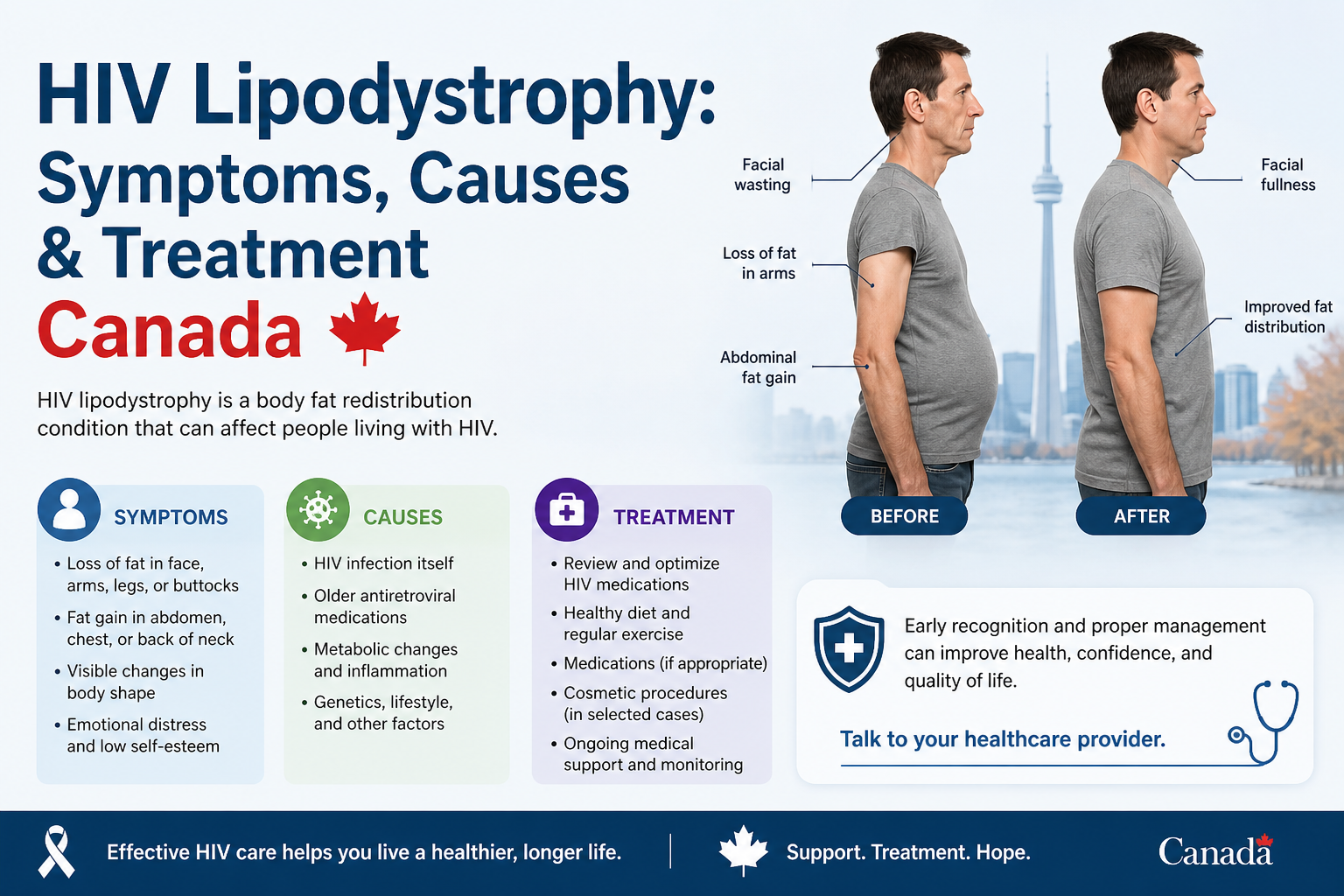
HIV lipodystrophy is a condition that changes how the body stores and distributes fat, and it affects thousands of Canadians living with HIV who rely on antiretroviral therapy (ART) to stay healthy. Studies suggest this syndrome may develop in 40% to over 80% of people on long-term HIV treatment, making it one of the most common physical side effects faced by this community across Canada.
Understanding HIV Lipodystrophy and Its Impact on Canadians
Understanding the causes and signs of antiretroviral therapy side effects like lipodystrophy is essential for patients, caregivers, and healthcare providers. Recognizing these changes early can lead to better treatment outcomes and help Canadians living with HIV maintain both their physical health and quality of life.
What Is HIV Lipodystrophy?
HIV lipodystrophy is a metabolic syndrome linked to antiretroviral therapy. It causes abnormal changes in the way the body distributes fat tissue. These changes can affect both appearance and overall health.
The condition first became widely recognized in the mid-1990s. This was around the same time that highly active antiretroviral therapy became widely available. As a result, people living with HIV began living longer — but some developed new physical side effects from the medications keeping them healthy.
There are two main types of fat changes involved. The first is lipohypertrophy, which means excess fat builds up in certain areas. The second is lipoatrophy, which means fat is lost from other areas. Both can happen at the same time in the same person.
For more background on HIV treatment and its effects, visit Health Canada’s information on antiretroviral medications.
Signs and Symptoms of HIV Lipodystrophy
The symptoms of HIV lipodystrophy vary from person to person. However, there are common patterns that doctors recognize. Changes can begin as early as the first year of treatment and tend to worsen over time.
Fat Gain in Certain Areas
Some people develop fat deposits in specific parts of the body. This includes the belly, the upper back and neck area, and around the breasts. A noticeable fat pad at the back of the neck is sometimes called a “buffalo hump.” This buildup of central fat is called lipohypertrophy.
These changes can look and feel uncomfortable. They may also affect posture and movement depending on their size and location.
Fat Loss in Other Areas
At the same time, fat often disappears from the arms, legs, buttocks, and face. This loss of fat is called lipoatrophy. It can make veins more visible under the skin and give limbs a sunken or wasted appearance.
Facial lipoatrophy is one of the most visible and distressing aspects of HIV lipodystrophy. Fat is lost from the cheeks, temples, and the areas around the eyes and mouth. This causes the face to look hollow and deeply lined, with prominent cheekbones and a sunken appearance.
How Facial Changes Differ from Normal Aging
Facial fat loss from HIV lipodystrophy is different from normal aging. As people age naturally, both fat and bone structure change gradually together. However, in HIV-related lipoatrophy, fat loss is much more severe — and the bone structure stays the same.
This creates a distinctive appearance. The jawline, cheekbones, and eye sockets become very prominent. Muscle outlines may become visible through the skin. These changes can happen even in younger people.
Furthermore, the visible nature of these facial changes can identify a person as living with HIV. This can cause significant social and emotional distress.
How HIV Lipodystrophy Affects Quality of Life
The physical changes caused by HIV lipodystrophy can have a deep impact on how a person feels about themselves. Many people experience psychological discomfort related to their changed appearance. This is especially true when facial changes are noticeable to others.
Some people feel stigmatized by their appearance. Visible HIV-related changes can lead to unwanted questions or reactions from people around them. This can cause social withdrawal, anxiety, and depression.
In addition, feeling self-conscious about appearance can lead some people to skip or stop their antiretroviral medication. This is called reduced treatment adherence, and it can have serious consequences for health. Staying on ART is critical for managing HIV effectively and maintaining a good quality of life.
The World Health Organization’s HIV/AIDS fact sheet outlines how consistent treatment leads to better long-term outcomes for people living with HIV.
Treatment Options for HIV Lipodystrophy
There is no single cure for HIV lipodystrophy, but several effective treatment options exist. The right choice depends on the individual patient’s needs, medical history, and the extent of the changes.
Injectable Fillers
One of the most common treatments for facial lipoatrophy involves injectable fillers. These include hyaluronic acid and poly-L-lactic acid. These substances are injected into the face to restore lost volume.
This approach is minimally invasive and relatively straightforward. The use of resorbable (naturally absorbed) fillers has reduced the risk of serious side effects. However, the procedure usually needs to be repeated every one to two years. The exact timeline depends on the product used, the area treated, and the patient’s metabolism.
Fat Transfer (Autologous Fat Grafting)
Another effective option is autologous fat transfer. This procedure takes fat from one part of the patient’s own body and injects it into the face or other areas needing volume. Because the fat comes from the patient themselves, the risk of allergic reactions is very low.
Therefore, this option is particularly useful for people with allergies or autoimmune conditions. It also tends to be more cost-effective than repeated filler injections. However, it is only suitable when the patient has enough fat elsewhere in the body to harvest.
Facial Implants
In selected cases, facial implants may be considered. These provide a permanent structural solution for severe fat loss. However, implants carry more surgical risk and are not appropriate for everyone. A specialist will assess whether this option is right for a specific patient.
Liposuction for Fat Accumulation
For people dealing with lipohypertrophy — particularly the buffalo hump at the back of the neck — liposuction can be an effective option. This surgical procedure removes excess fat deposits. Results are generally satisfactory, and the procedure is well-tolerated in suitable candidates.
It is worth noting that improving the physical effects of lipodystrophy is not just about appearance. These treatments can meaningfully improve mental health, self-confidence, and a patient’s willingness to stay on their HIV medication. That, in turn, supports better long-term health outcomes.
Learn more about how body composition changes relate to metabolic health at the Mayo Clinic’s lipodystrophy overview.
When to See a Doctor
If you are living with HIV and notice changes in your body shape or facial appearance, talk to your doctor as soon as possible. These changes may be early signs of HIV lipodystrophy. Catching them early gives you more treatment options.
Your family doctor or HIV specialist is the best starting point. They can assess the changes, review your current antiretroviral therapy, and refer you to the right specialist. In some cases, your provincial health plan may cover part of the cost of assessment or treatment — ask your provider about coverage in your province.
If you do not have a family doctor, a walk-in clinic can help with an initial assessment and referral. Many cities across Canada also have specialized HIV clinics attached to hospitals or community health centres. These clinics have teams experienced in managing the full range of HIV-related concerns, including lipodystrophy.
Do not ignore emotional or psychological distress related to body image changes. Mental health support is an important part of overall HIV care. Ask your care team about counselling and support programmes available in your area.
As always, any changes to your treatment plan should only be made under the guidance of a qualified healthcare provider.
Frequently Asked Questions About HIV Lipodystrophy
What causes HIV lipodystrophy?
HIV lipodystrophy is caused by a combination of HIV infection itself and the side effects of antiretroviral therapy (ART). Certain older antiretroviral medications are more strongly linked to fat changes than newer ones. Speak with your HIV specialist if you are concerned about lipodystrophy related to your current medication.
Can HIV lipodystrophy be reversed?
Some fat redistribution may improve if antiretroviral medications are switched to newer, better-tolerated options. However, significant fat loss — especially in the face — often does not fully reverse on its own. Treatments like injectable fillers or fat transfer can restore much of the lost volume.
How common is HIV lipodystrophy in people on antiretroviral therapy?
Studies show that HIV lipodystrophy may affect between 40% and over 80% of people on long-term antiretroviral therapy. The wide range reflects differences in the medications used, duration of treatment, and how lipodystrophy is defined and measured. It remains one of the most common physical side effects of HIV treatment.
Is HIV lipodystrophy treatment covered by provincial health plans in Canada?
Coverage for lipodystrophy treatment varies by province and by the specific treatment involved. Some procedures may be covered when deemed medically necessary, while cosmetic aspects may not be covered. It is best to speak with your care team and contact your provincial health plan directly to understand your options.
Does HIV lipodystrophy affect mental health?
Yes, the visible changes caused by HIV lipodystrophy — particularly facial wasting — can significantly affect a person’s mental health and self-esteem. Some people experience anxiety, depression, and social withdrawal as a result. Addressing both the physical and emotional aspects of lipodystrophy is an important part of comprehensive HIV care.
What is the difference between lipoatrophy and lipohypertrophy in HIV?
According to Public Health Agency of Canada’s HIV/AIDS resources, this information is supported by current medical research.
For more information, read our guide on managing mental health through supportive activities.
Lipoatrophy refers to the loss of fat from areas like the face, arms, legs, and buttocks. Lipohypertrophy refers to the abnormal build-up of fat in areas like the belly, upper back, or neck. Both are forms of HIV lipodystrophy and can occur at the same time in the same person.
For a complete overview, read our guide: HIV and AIDS in Canada: Complete Guide.
Key Takeaways
- HIV lipodystrophy is a common side effect of long-term antiretroviral therapy, affecting fat distribution throughout the body.
- It involves two processes: lipoatrophy (fat loss, especially in the face and limbs) and lipohypertrophy (fat gain in the belly, neck, and back).
- Facial changes can be particularly distressing and may affect a person’s mental health and willingness to continue HIV treatment.
- Effective treatments are available, including injectable fillers, autologous fat transfer, facial implants, and liposuction for fat build-up.
- Canadians living with HIV should speak with their family doctor, HIV specialist, or a local HIV clinic to explore treatment and support options.
- Some treatment costs may be covered under provincial health plans — ask your provider about your eligibility.
- Always consult a qualified healthcare professional before making any changes to your HIV treatment or pursuing any new procedures.

About the Author
Dr. Michael Ross, MD, FRCSCDr. Michael Ross is a fellowship-trained orthopedic surgeon at the University of Alberta Hospital, specializing in joint replacement and sports medicine. A Fellow of the Royal College of Surgeons of Canada (FRCSC), he has over 18 years of surgical experience and has authored multiple textbook chapters on musculoskeletal health. Dr. Ross is passionate about patient education and evidence-based medicine.
View all articles →