Living with HIV: What Every Canadian Should Know

Share
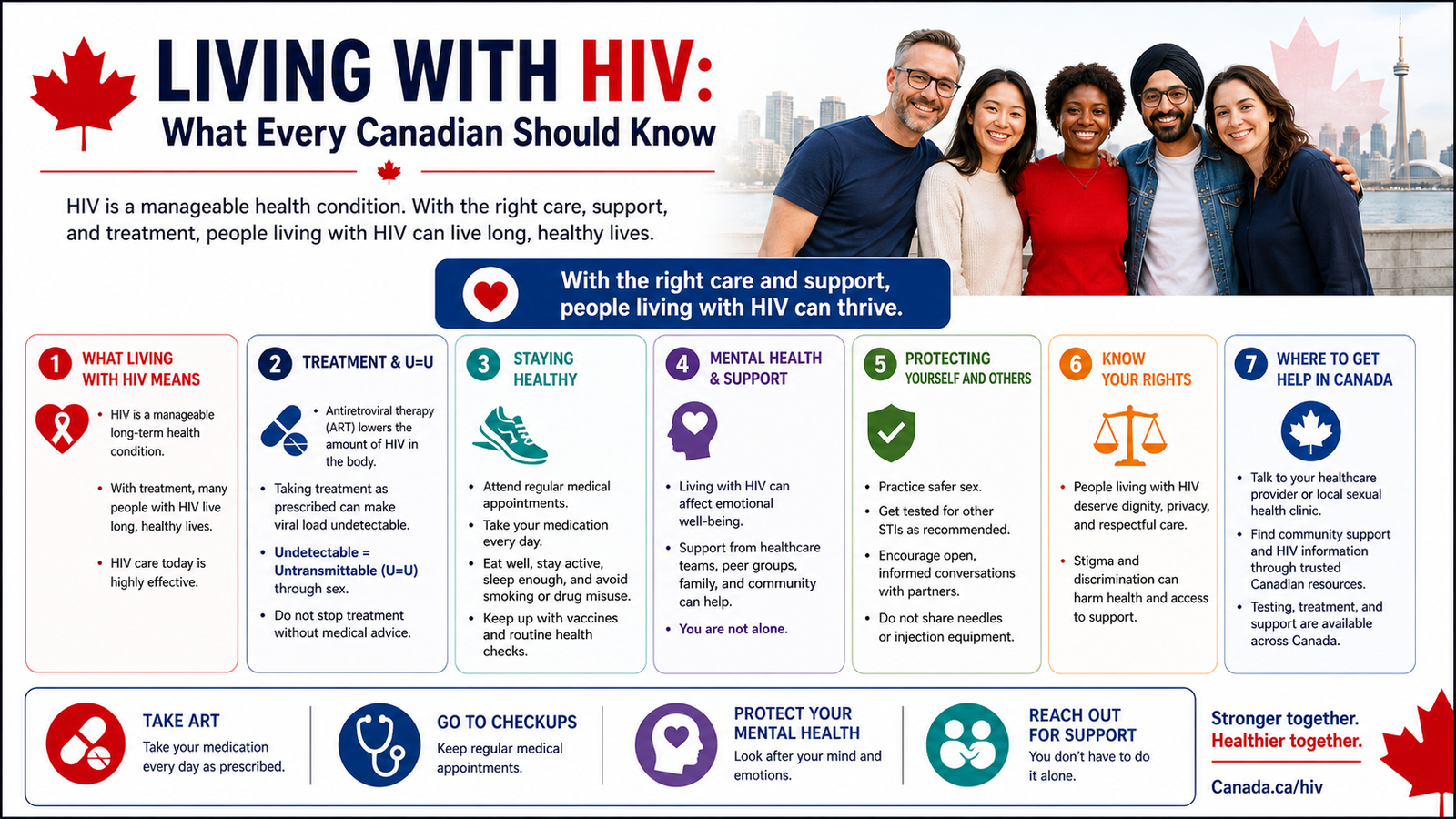
Living with HIV is not the same as having AIDS — and for many Canadians, it means enjoying a long, healthy, and full life with the right care and support. HIV (human immunodeficiency virus) attacks the immune system, but thanks to remarkable advances in medicine, early diagnosis and consistent treatment can prevent the virus from ever progressing to AIDS.
Living with HIV in Canada: Treatment, Life Expectancy, and Support
Understanding the HIV vs AIDS difference is one of the most important steps in reducing stigma and empowering those affected. This article answers the most common questions Canadians have about HIV, including how it spreads, what symptoms to watch for, how treatment works, and how Canadian healthcare can support you every step of the way — from free testing to lifelong medical coverage.
What Is the Difference Between HIV and AIDS?
HIV is the virus that, if left untreated, can eventually lead to AIDS (acquired immunodeficiency syndrome). However, having HIV does not automatically mean you have AIDS. These are two distinct stages of the same condition.
HIV destroys CD4 cells — the white blood cells your immune system uses to fight off illness. AIDS is diagnosed when your CD4 cell count drops below 200, or when certain serious infections develop alongside HIV. With proper treatment, many people with HIV never reach this stage at all.
Thanks to modern medicine, people living with HIV today can expect a near-normal lifespan. According to the World Health Organization’s HIV fact sheet, antiretroviral therapy has transformed HIV from a fatal diagnosis into a manageable chronic condition.
How Does HIV Spread — and How Does It Not?
One of the biggest misconceptions about living with HIV is how the virus actually spreads. You cannot get HIV from everyday contact. Hugging someone, sharing a towel, or drinking from the same glass will not transmit the virus.
Common Ways HIV Is Transmitted
HIV spreads through specific bodily fluids — mainly blood, semen, vaginal fluids, and breast milk. The most common routes of transmission include:
- Unprotected sexual contact (vaginal, anal, or oral)
- Sharing needles, syringes, or other drug use equipment
- Sharing unsterilised tools such as tattoo needles or nail scissors
- From a mother to her baby during pregnancy, childbirth, or breastfeeding
- Blood transfusions — though in Canada, the blood supply is carefully screened and this risk is extremely low
In rare cases, HIV has been transmitted through a blood transfusion. However, Canadian hospitals and blood services test all donated blood, making this route of infection very uncommon in our healthcare system.
What You Cannot Catch HIV From
You cannot get HIV from shaking hands, coughing, sneezing, insect bites, or toilet seats. Casual, everyday contact poses zero risk. Understanding this helps reduce the stigma that people living with HIV still face today.
Recognising the Symptoms of HIV
Many people are surprised to learn that HIV often causes no symptoms at all — sometimes for years. This is one reason why testing is so important. You cannot rely on symptoms alone to know your status.
However, some people do experience early symptoms within 10 days to a few weeks after infection. These early signs are often mistaken for the flu or mononucleosis and may include:
- Fever and chills
- Fatigue and body aches
- Skin rash
- Sore throat
- Swollen lymph nodes
These symptoms usually disappear within a few weeks. After that, HIV can remain “silent” for many years while still damaging the immune system. Therefore, the only reliable way to know your HIV status is to get tested. Health Canada provides information on approved HIV testing options available across the country.
Living with HIV: Treatment and Life Expectancy
There is currently no cure for HIV. However, antiretroviral therapy (ART) — a combination of medications taken daily — can suppress the virus to undetectable levels in the blood. This means the virus is still present, but it cannot damage the immune system or be passed on to others at that level.
How Does HIV Treatment Work?
Different HIV medications work in different ways. Some block proteins the virus needs to copy itself. Others prevent HIV from entering your immune cells in the first place. Your doctor will choose the right combination based on your overall health, your CD4 count, and the amount of virus in your blood (called your viral load).
The good news is that most people respond well to treatment. Furthermore, many Canadians living with HIV take just one pill per day. Provincial health plans in most provinces — including Ontario, British Columbia, Alberta, and Quebec — cover the cost of HIV medications for eligible residents, so cost should not be a barrier to starting treatment.
Does HIV Shorten Your Life?
Not necessarily — especially when treatment starts early. Some people do progress to AIDS within months if the virus attacks their immune system very quickly. However, many others live for decades with HIV, enjoying full and active lives. Regular medical appointments and following your treatment plan are the two most important things you can do to stay well.
According to the Mayo Clinic’s overview of HIV and AIDS, people who start treatment early and stick to it consistently have life expectancies close to those without HIV.
Sexual Health and HIV: Protecting Yourself and Others
Living with HIV does not mean your sex life has to end. However, it does mean taking extra steps to protect yourself and your partners. This is an important part of responsible sexual health for everyone.
Do Both Partners Still Need Condoms If Both Have HIV?
Yes — and this is a question many people get wrong. Even if both partners are HIV-positive, using a condom is still strongly recommended. Different strains of HIV exist, and some strains are resistant to certain medications. Reinfection with a drug-resistant strain can make treatment much harder.
In addition, condoms protect against other sexually transmitted infections (STIs) such as chlamydia, gonorrhoea, and syphilis. Even someone on effective HIV treatment can still contract and pass on other STIs.
Can People with HIV Have Children?
Yes. With proper medical care, people living with HIV can have healthy babies. The risk of passing HIV to a baby during pregnancy or childbirth can be greatly reduced through antiretroviral medication and close monitoring by a healthcare team. Women who are pregnant and HIV-positive can take medications that protect both themselves and their baby. This is something to discuss carefully with your doctor well before or as soon as you become pregnant.
Preventing Other Infections When You Have HIV
A weakened immune system means your body is less able to fight off infections that healthy people handle easily. People living with HIV may be more vulnerable to what are called “opportunistic infections.” These are illnesses that take advantage of a weakened immune system.
Common opportunistic infections include:
- Pneumocystis pneumonia (PCP)
- Tuberculosis (TB)
- Candidiasis (a fungal infection)
- Cytomegalovirus (CMV)
- Toxoplasmosis
The best way to reduce this risk is to stay consistent with your HIV treatment. Keeping your viral load low and your CD4 count high gives your immune system its best chance. In addition, some of these infections can be prevented with specific medications your doctor may prescribe as a precaution.
Practical steps also help. Avoid undercooked meat and fish, wash fruits and vegetables thoroughly, and be cautious with water sources when travelling internationally. Small habits can make a real difference when your immune system needs extra support.
When to See a Doctor About HIV
If you think you may have been exposed to HIV, do not wait for symptoms — because symptoms may never come. See your family doctor or visit a walk-in clinic as soon as possible. HIV testing is confidential and widely available across Canada through family doctors, sexual health clinics, walk-in clinics, and community health centres.
You should also speak to a doctor if:
- You have had unprotected sex with a new or unknown partner
- You have shared needles or drug use equipment
- You are pregnant or planning to become pregnant and are HIV-positive
- You are experiencing flu-like symptoms after a possible exposure
- You have been diagnosed with HIV and want to discuss starting treatment
If you were recently exposed to HIV — within the last 72 hours — ask a doctor or pharmacist about PEP (post-exposure prophylaxis). PEP is an emergency medication that can significantly reduce your chances of becoming infected. Time matters, so act quickly. As always, speak with your healthcare provider about what is right for your personal situation. This article is for general information only and is not a substitute for professional medical advice.
Frequently Asked Questions About Living with HIV
Can you live a normal life with HIV in Canada?
Yes — living with HIV in Canada today is very different from what it was decades ago. With antiretroviral treatment, most people with HIV can maintain a near-normal life expectancy and enjoy good quality of life. Provincial health plans in most provinces help cover the cost of HIV medications for eligible residents.
How soon after exposure should I get tested for HIV?
Most HIV tests are accurate about 3 to 4 weeks after exposure, though some tests may take up to 3 months to give a fully reliable result. If you think you were exposed very recently — within 72 hours — visit a doctor or walk-in clinic right away to ask about PEP, an emergency prevention medication. Do not wait for symptoms before getting tested.
Is HIV the same as AIDS?
No — HIV and AIDS are not the same thing. HIV is the virus, while AIDS is the most advanced stage of HIV infection. Many people living with HIV never develop AIDS, especially when they start treatment early and take their medication consistently.
Can HIV be transmitted through kissing or saliva?
HIV is not transmitted through saliva, kissing, hugging, or other casual contact. The virus spreads through specific bodily fluids such as blood, semen, vaginal fluids, and breast milk. Everyday social contact with someone living with HIV poses no risk of transmission.
What does “undetectable” mean for someone living with HIV?
When someone living with HIV takes their medication consistently, the virus can drop to levels so low that standard tests cannot detect it — this is called “undetectable.” An undetectable viral load means the virus is not damaging the immune system, and current evidence shows that a person with an undetectable viral load cannot sexually transmit HIV to a partner. This is sometimes referred to as U=U (Undetectable = Untransmittable).
Where can I get an HIV test in Canada?
According to Government of Canada’s official HIV and AIDS resource page, this information is supported by current medical research.
For more information, read our guide on supporting children’s health and well-being through the right activities.
HIV testing is available at your family doctor’s office, walk-in clinics, sexual health centres, and community health organisations across Canada. Testing is confidential, and in many provinces it is covered under your provincial health plan. Some areas also offer free or anonymous testing — contact your local public health unit to find options near you.
For a complete overview, read our guide: HIV and AIDS in Canada: Complete Guide.
Key Takeaways
- HIV and AIDS are not the same. HIV is the virus; AIDS is the advanced stage that treatment can often prevent.
- Treatment works. Antiretroviral therapy allows most people living with HIV to live long, healthy lives.
- You cannot get HIV from casual contact. Hugging, sharing dishes, or shaking hands poses no risk.
- Symptoms are not reliable. Many people have no symptoms for years — testing is the only way to know your status.
- Condoms still matter — even when both partners have HIV — to prevent other STIs and drug-resistant HIV strains.
- Pregnancy is possible with proper medical care and medication to protect the baby.
- Act quickly after exposure. If you think you were exposed in the last 72 hours, ask about PEP at a walk-in clinic or emergency department.
- Talk to your doctor. Your family doctor or a sexual health clinic can guide you through testing, treatment, and support options available in your province.

About the Author
Dr. James Okafor, MD, PhDDr. James Okafor holds an MD and PhD in Neurological Sciences from McGill University. With 12 years of experience in clinical neurology and mental health research, he has contributed to landmark studies on depression, anxiety, and cognitive health. Dr. Okafor is a Fellow of the Royal College of Physicians and Surgeons of Canada and serves on the editorial board of two peer-reviewed journals.
View all articles →