Leg Fracture: Causes, Symptoms & Treatment in Canada

Share
A leg fracture is one of the most common orthopaedic injuries treated in Canadian emergency departments, affecting thousands of people each year across every age group. Whether caused by a sports collision, a fall on icy pavement, or a motor-vehicle accident, a break in the tibia or fibula can range from a hairline stress fracture to a severe, multi-fragment injury that demands surgery.
What Is a Leg Fracture and How Does It Happen?
Recognising broken leg symptoms early and understanding your treatment options can make a significant difference in your recovery timeline. In this guide, we cover the causes, risk factors, diagnosis, and evidence-based treatments available to Canadians so you can take the right steps toward healing safely and effectively.
What Is a Leg Fracture?
| Fracture Type | Characteristics | Common Causes | Typical Management |
|---|---|---|---|
| Stress Fracture | Small crack or severe bruising within bone; often affects tibia; develops gradually over time | Repetitive force, overuse, sudden increase in physical activity | Rest, activity modification, protective footwear; rarely requires surgery |
| Hairline Fracture | Thin crack in bone that may not go all the way through; may be difficult to detect on initial X-ray | Overuse, osteoporosis, repetitive impact sports | Rest, protected weight-bearing, cast or walking boot for 6–8 weeks |
| Displaced Fracture | Bone breaks into two or more pieces that are no longer aligned; significant instability present | High-impact trauma, motor vehicle collisions, falls from height | Surgical intervention often required; internal fixation with plates, screws, or rods |
| Comminuted Fracture | Bone shatters into three or more fragments; complex injury pattern with significant soft tissue damage | Severe trauma, high-energy impacts, crush injuries | Surgery with internal or external fixation; extended rehabilitation; bone grafting may be needed |
| Open (Compound) Fracture | Broken bone pierces through skin; high risk of infection and vascular injury; medical emergency | High-velocity trauma, motorcycle accidents, severe falls | Emergency care, IV antibiotics, surgical debridement, stabilization; treated at Canadian trauma centres |
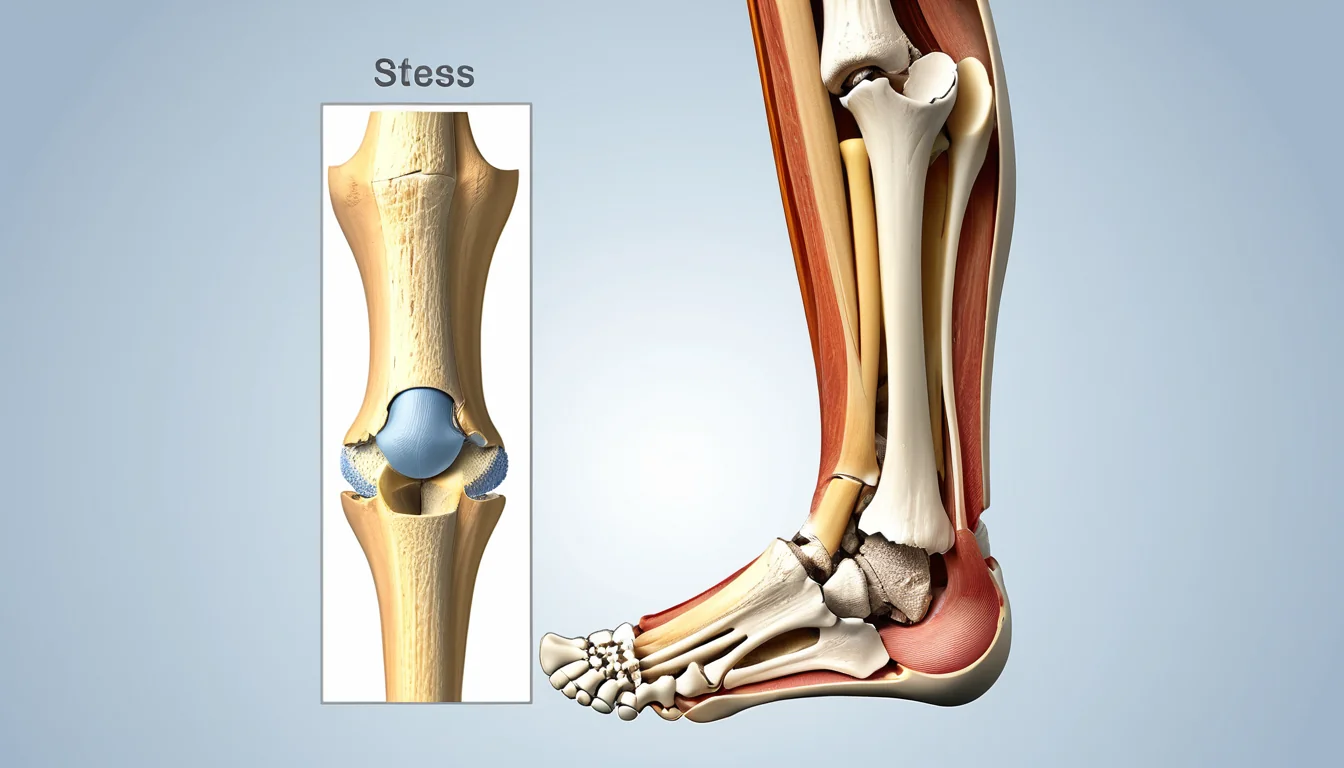
Your lower leg contains two bones that run side by side. The tibia is the larger bone on the inner side of your leg. It carries most of your body weight when you stand and walk. The fibula (also called the peroneal bone) is the thinner bone on the outer side. It connects to the tibia at both ends and helps stabilise your ankle.
A leg fracture happens when a strong force breaks the continuity of one or both of these bones. The break can be a clean line, a spiral, or a shattered pattern with many fragments. In some cases, a broken bone can pierce through the skin, which doctors call an open fracture. This is a medical emergency.
For more background on how bones break and heal, visit the Mayo Clinic’s guide to broken legs.
Who Is Most at Risk for a Leg Fracture?
Leg fractures do not affect everyone equally. Certain groups face a higher risk due to lifestyle, age, or bone density.
Men and Active Adults
Leg fractures happen more often in men than in women or children. High-impact activities like contact sports, construction work, and motor vehicle accidents are common causes. In Canada, car and cycling accidents account for a significant number of serious leg fractures each year.
Older Adults
As we age, our bones lose minerals and become less dense. This is called osteoporosis, and it makes bones much easier to break. Older Canadians may suffer a leg fracture from something as minor as a stumble or a low-speed fall. Provincial health plans often cover bone density screening for adults over 50, so ask your family doctor about this test.
Children
Interestingly, leg fractures are less common in children. Children’s bones are more flexible, their muscles are lighter, and their body weight is lower. However, when children do break a leg, it often happens differently than in adults. Their bones may bend or crack without a complete break, which doctors call a greenstick fracture.
Athletes and High-Activity Individuals
Runners, ballet dancers, and high-performance athletes can develop stress fractures. These are tiny cracks that build up over time from repeated impact. Stress fractures in the tibia commonly appear where the middle third meets the upper third of the bone. Fibula stress fractures often appear just above the ankle joint and are frequently seen in long-distance runners.
Common Causes and Types of Leg Fractures
Doctors classify leg fractures based on how the injury happened. Understanding the type of fracture helps guide treatment decisions.
Direct Fractures
A direct fracture happens when a strong force hits the leg at the exact point of the break. Car accidents are the most common cause of this type. The bone may shatter into several pieces, creating what doctors call a comminuted fracture. These injuries are serious and often require surgical repair.
Indirect Fractures
An indirect fracture happens when the force travels through the body and breaks the bone at a different point. Twisting injuries during sports are a classic example. The bone often breaks in a spiral pattern, called a spiral fracture. These are common in skiing and football injuries.
Fracture Patterns
Doctors also describe fractures by the pattern of the break. Common patterns include:
- Spiral fractures — the most common type involving both lower leg bones
- Oblique fractures — the break runs at an angle across the bone
- Transverse fractures — the break runs straight across
- Bifocal fractures — the bone breaks in two separate places
- Comminuted fractures — the bone shatters into three or more pieces
A special type worth knowing about is the Maisonneuve fracture. This involves a spiral break near the top of the fibula combined with an injury to the ankle joint. It can be missed without proper X-rays of both the ankle and the knee.
Recognising the Symptoms of a Leg Fracture
Knowing the signs of a leg fracture can help you decide how quickly you need care. Symptoms fall into two categories: general signs that affect your whole body, and local signs at the injury site.
General Symptoms
After a serious leg fracture, you may feel anxious, pale, or restless. In severe cases — especially with open fractures or multiple injuries — the body can go into shock. Shock is a life-threatening condition where blood pressure drops dangerously low. Call 911 immediately if you suspect shock.
Local Symptoms at the Injury Site
Local signs of a leg fracture are easier to spot. They include:
- Pain — sharp, constant pain at one specific point that gets worse when you move the leg
- Swelling and bruising — the area around the break swells quickly; bruising may appear hours later
- Deformity — the leg may look bent, twisted, or shorter than the other leg
- Inability to bear weight — you cannot lift or put weight on the injured leg
- Abnormal movement — the leg moves in an unnatural way
- Bone grating sensation — you may feel or hear a grating sound when the broken ends rub together
However, not all fractures are obvious. A stress fracture, for example, may only cause a dull ache that gets worse with activity. Furthermore, some fibula fractures cause only mild swelling and may be mistaken for a sprained ankle. When in doubt, always get an X-ray.
How Doctors Diagnose a Leg Fracture
Diagnosis of a leg fracture begins with a physical exam. A doctor will look at and gently feel the injured leg, checking for swelling, deformity, and abnormal movement. However, an X-ray is always required to confirm the diagnosis.
X-rays are taken from two angles — front and side — to get a full picture of the break. Importantly, the X-ray must include both the knee and the ankle joints. This ensures that no related injuries are missed. In complex cases, a CT scan or MRI may also be ordered to get more detail.
For a thorough overview of diagnostic imaging for bone injuries, see Healthline’s article on broken leg diagnosis and treatment.
Possible Complications of a Leg Fracture
Leg fractures can lead to serious complications if not treated promptly and properly. As a result, it is important to understand what can go wrong.
Immediate Complications
Open leg fractures — where the bone breaks through the skin — are the most common open fracture in the body. They carry a high risk of infection and require urgent surgery. Blood vessel damage near the fracture can cut off circulation to the foot, which can lead to tissue death (gangrene) if not treated immediately. Nerve damage may also occur alongside blood vessel injuries, causing numbness or weakness in the foot.
Another serious immediate complication is compartment syndrome. This happens when bleeding and swelling build up pressure inside the tight compartments of muscle tissue in the leg. The increased pressure cuts off blood supply to the muscles and nerves. Without emergency treatment, compartment syndrome leads to permanent muscle damage, scarring, and loss of function. Signs include severe pain that does not improve with pain medication, especially pain with passive movement of the toes.
Long-Term Complications
Delayed healing is one of the most common long-term complications of leg fractures. The middle and lower third of the tibia is especially slow to heal because of its limited blood supply. In some cases, the bone does not heal at all — a condition called non-union or pseudarthrosis. Other long-term issues include:
- Malunion — the bone heals in the wrong position, causing the leg to be crooked or shortened
- Leg length discrepancy — one leg becomes noticeably shorter than the other
- Joint stiffness — the knee or ankle may become stiff during recovery
- Chronic pain — some people experience ongoing pain, especially with weather changes or prolonged activity
When to See a Doctor
If you think you or someone you know has a leg fracture, seek medical attention right away. Do not try to walk on the injured leg or straighten it yourself. In Canada, you have several options for getting care quickly.
For serious injuries — especially open fractures, signs of shock, or suspected compartment syndrome — call 911 or go to the nearest emergency department immediately. Most Canadian hospitals have on-call orthopaedic teams available around the clock.
For less severe injuries, such as a suspected stress fracture, you can visit a walk-in clinic or contact your family doctor. Your provincial health plan covers emergency fracture care. Your doctor will arrange X-rays and refer you to an orthopaedic specialist if needed. Do not delay — early diagnosis leads to better outcomes. Health Canada provides resources to help you find care in your province or territory.
Always consult a qualified healthcare provider before making decisions about your health. The information in this article is for educational purposes only and does not replace professional medical advice.
Frequently Asked Questions About Leg Fractures
How long does a leg fracture take to heal?
Most leg fractures take between 3 and 6 months to heal, depending on the severity of the break and your overall health. Stress fractures may heal in 6 to 8 weeks with rest, while severe or comminuted leg fractures can take 6 months or longer. Your orthopaedic specialist will monitor your healing with follow-up X-rays.
Can you walk on a leg fracture?
In most cases, you should not walk on a leg fracture without medical clearance. Putting weight on a broken leg can worsen the break, damage surrounding tissue, and delay healing. Some minor fibula fractures may allow partial weight-bearing with a protective boot, but only a doctor can make that decision safely.
What is the difference between a tibia fracture and a fibula fracture?
The tibia is the main weight-bearing bone of the lower leg, so a tibia fracture is generally more serious and more painful. A fibula fracture involves the thinner outer bone and may cause less disability, though it still requires proper diagnosis and treatment. In many leg fracture cases, both bones are broken at the same time.
What is compartment syndrome and why is it dangerous?
Compartment syndrome is a serious complication where pressure builds up inside the muscle compartments of the leg after a fracture. This pressure cuts off blood supply to the muscles and nerves, causing permanent damage if not treated within hours. It is a surgical emergency — if you have severe, worsening pain after a leg fracture, go to the emergency department immediately.
Is a leg fracture covered by provincial health insurance in Canada?
Yes, emergency treatment for a leg fracture — including X-rays, casting, and surgery — is covered under provincial and territorial health plans across Canada. Follow-up visits with your family doctor and orthopaedic specialist are also generally covered. Some costs, such as crutches or physiotherapy, may require additional coverage through private or employer health benefits.
What is a stress fracture in the leg?
According to Mayo Clinic’s guide to broken leg diagnosis and treatment, this information is supported by current medical research.
For more information, read our guide on back pain causes and treatment options for Canadians.
A stress fracture is a small crack in the bone caused by repeated impact over time, rather than a single traumatic event. In the lower leg, stress fractures often affect runners, dancers, and soldiers, typically appearing in the tibia or fibula. Rest is the primary treatment, and returning to activity too soon can turn a stress fracture into a complete leg fracture.
Key Takeaways
- A leg fracture is a break in the tibia, fibula, or both bones of the lower leg.
- Causes range from car accidents and sports injuries to stress fractures from repetitive activity.
- Symptoms include localised pain, swelling, bruising, deformity, and inability to bear weight.
- X-rays from two angles — including the knee and ankle — are always needed for a proper diagnosis.
- Serious complications include open fractures, blood vessel damage, nerve injury, and compartment syndrome.
- Long-term complications include delayed healing, non-union, malunion, and chronic pain.
- Seek emergency care for severe injuries; visit a walk-in clinic or family doctor for less urgent concerns.
- Treatment is covered under Canadian provincial health plans — do not delay getting care.
Frequently Asked Questions
What is a leg fracture?
A leg fracture is a break in one or more bones of the leg, including the femur (thigh bone), tibia, or fibula (lower leg bones). Fractures range from hairline cracks to complete breaks and can result from trauma, falls, or repetitive stress. Severity determines whether surgical or non-surgical treatment is required.
What are the symptoms of a leg fracture?
Common leg fracture symptoms include sudden, severe pain at the injury site, swelling, bruising, and tenderness. You may notice visible deformity, an inability to bear weight, or hear a snapping sound at the time of injury. In severe cases, bone may protrude through the skin, requiring immediate emergency care.
How is a leg fracture treated in Canada?
Leg fracture treatment depends on severity. Minor fractures are managed with casting, splinting, and rest. Severe or displaced fractures may require surgery involving metal rods, plates, or screws to stabilize the bone. Physiotherapy is typically recommended afterward to restore strength and mobility. Treatment is covered under provincial health insurance plans.
When should you see a doctor for a leg injury?
See a doctor immediately if you experience severe leg pain after an injury, cannot bear weight, notice visible deformity, or have significant swelling and bruising. If the skin is broken near the injury site, seek emergency care right away to prevent infection. Never ignore suspected fractures, as untreated breaks can cause serious complications.
How can you prevent a leg fracture?
Prevent leg fractures by maintaining strong bones through adequate calcium and vitamin D intake, regular weight-bearing exercise, and avoiding smoking. Wear proper footwear, use protective gear during sports, and remove household fall hazards. Older Canadians should discuss bone density screening with their doctor to identify and manage osteoporosis early.

About the Author
Dr. James Okafor, MD, PhDDr. James Okafor holds an MD and PhD in Neurological Sciences from McGill University. With 12 years of experience in clinical neurology and mental health research, he has contributed to landmark studies on depression, anxiety, and cognitive health. Dr. Okafor is a Fellow of the Royal College of Physicians and Surgeons of Canada and serves on the editorial board of two peer-reviewed journals.
View all articles →