HIV and AIDS: Myths vs. Facts Every Canadian Must Know

Share
HIV and AIDS are still widely misunderstood by millions of people, even decades after the virus was first identified. Misinformation spreads fear, shame, and — most dangerously — risky behaviour that puts Canadians at unnecessary risk. This article breaks down the most persistent myths and replaces them with science-backed facts.
Common HIV and AIDS Myths — and What Science Really Says
Understanding HIV transmission myths is essential for protecting yourself, supporting those living with the virus, and reducing stigma in Canadian communities. Below, we explain what the science actually says about how HIV spreads, what symptoms to watch for, and how modern treatment has transformed outcomes. As always, speak with your family doctor or visit a walk-in clinic if you have specific concerns about your health.
What Are HIV and AIDS?
HIV stands for Human Immunodeficiency Virus. It is a virus that attacks the immune system, specifically a type of white blood cell called CD4 cells (also known as T4 lymphocytes). These cells are your body’s defence against infections and illness.
Over time, HIV destroys enough of these cells that your body can no longer fight off common infections and certain cancers. When this happens, the condition is called AIDS — Acquired Immunodeficiency Syndrome. However, having HIV does not automatically mean you will develop AIDS. With proper treatment, many people never reach that stage.
According to Health Canada, tens of thousands of Canadians are currently living with HIV. Understanding the facts is the first step toward protecting yourself and others.
Common HIV and AIDS Myths — and the Real Facts
Fear and stigma have created many harmful myths about HIV and AIDS. These myths can stop people from getting tested, seeking treatment, or supporting loved ones. Let’s look at the most widespread misconceptions and what the evidence actually shows.
Myth 1: If You Have HIV, You Automatically Have AIDS
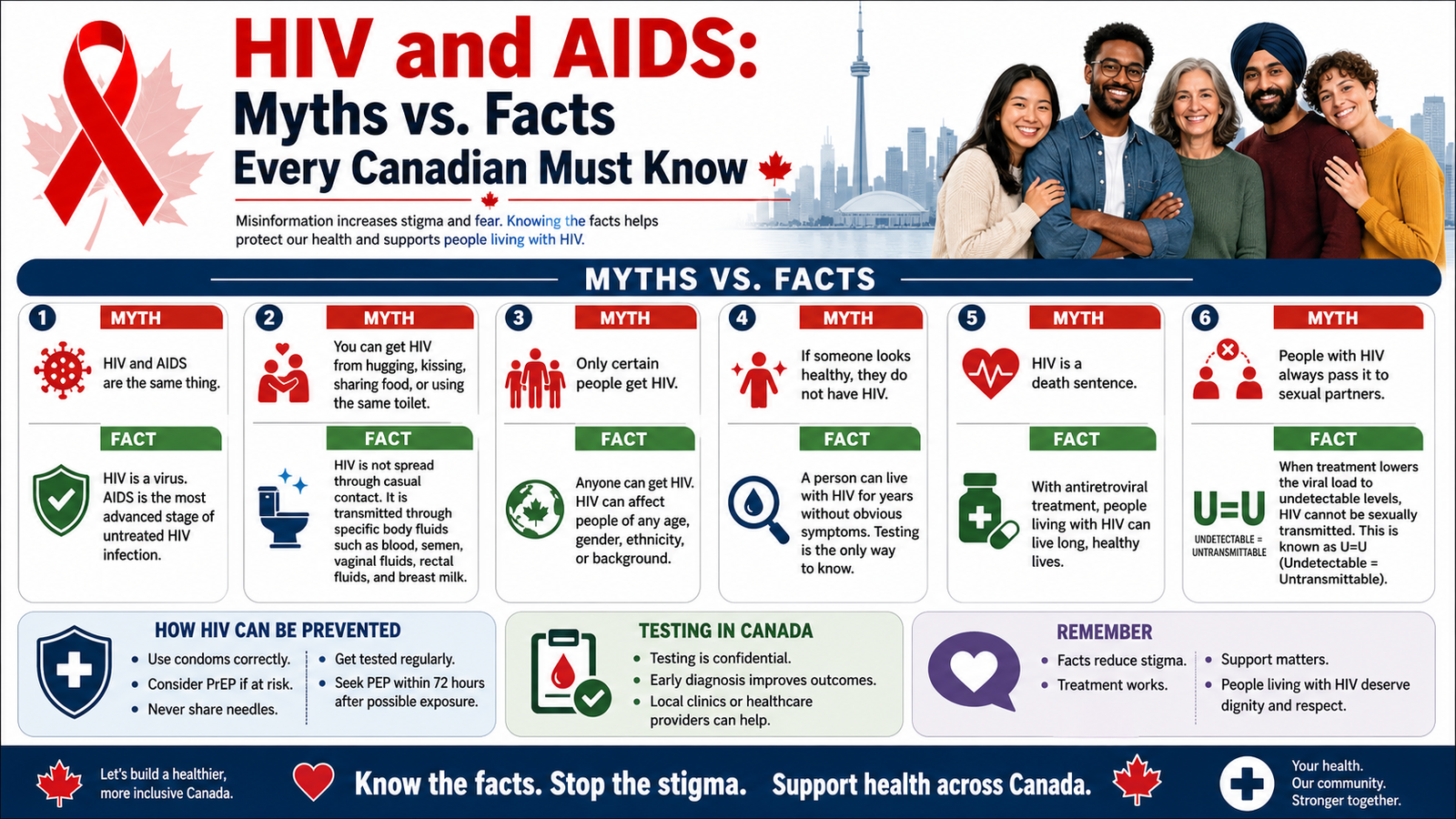
This is one of the most common misunderstandings. HIV and AIDS are not the same thing. HIV is the virus. AIDS is the most advanced stage of HIV infection.
Without treatment, AIDS typically develops 7 to 11 years after HIV infection. However, with modern antiretroviral therapy, many people with HIV live for decades without ever developing AIDS. Regular monitoring by a healthcare provider makes a significant difference in outcomes.
Myth 2: You Can Tell If Someone Has HIV by Their Symptoms
This myth is particularly dangerous. Many people with HIV have no symptoms at all for years. In fact, the only reliable way to know your HIV status is to get tested.
Some people do experience early symptoms within 10 days to a few weeks of infection. These can include:
- Fever lasting up to a month
- Swollen lymph nodes
- Joint and muscle pain that fades after about 30 days
These early symptoms are easy to confuse with the flu or mononucleosis. After they pass, a person can remain symptom-free for years — all while the virus is still active in their body and can be transmitted to others.
As the condition progresses toward AIDS, more serious symptoms may appear, such as:
- Recurring fever and night sweats
- Persistent diarrhoea
- Oral thrush (white patches inside the mouth)
- Recurring herpes outbreaks or shingles (herpes zoster)
- Unexplained skin changes, including seborrhoeic dermatitis
- Significant, unexplained weight loss
For more detail on symptom progression, the Mayo Clinic’s HIV/AIDS symptoms guide is a reliable resource.
Myth 3: An HIV Diagnosis Means You Have Very Little Time to Live
This myth belongs to the early years of the epidemic, not to today’s reality. The impact of HIV varies from person to person. It depends on your immune system, your overall health, and — most importantly — whether you receive and stick to treatment.
Today, many people living with HIV lead full, long lives. With consistent medical care and antiretroviral medication, HIV can be managed as a chronic condition, much like diabetes or high blood pressure. The key is regular visits to your family doctor and following your treatment plan closely.
HIV and AIDS Treatment: What You Need to Know
There is currently no cure for HIV and AIDS. However, there are highly effective medications that can keep the virus under control. These are called antiretroviral drugs.
These medications work in two main ways:
- They block HIV proteins from multiplying inside the body.
- They prevent the virus’s genetic material from entering healthy immune cells.
As a result, antiretroviral therapy can reduce the amount of virus in the blood to very low — sometimes undetectable — levels. This dramatically slows the progression toward AIDS and greatly reduces the risk of transmission.
In Canada, HIV treatment is covered under most provincial health plans. Talk to your family doctor or a sexual health clinic to find out what is available in your province.
Does Treatment Mean You Can’t Transmit HIV?
This is another dangerous myth. While treatment reduces the viral load in the blood, it does not eliminate the risk of transmission entirely. The virus can still be present in other body fluids and tissues.
Therefore, using condoms and taking other precautions remains essential — even when a person is on treatment. Protecting your partner is not optional.
How HIV Is — and Is Not — Transmitted
Understanding transmission is key to preventing the spread of HIV and AIDS. There is a lot of confusion about how the virus actually spreads — and how it does not.
Unprotected Sex Between Two HIV-Positive Partners — Is It Safe?
No. When both partners have HIV, unprotected sex is still risky. Different people can carry different strains of the virus. Some strains may be resistant to the medications one partner is taking.
Using a latex condom creates a barrier that prevents one strain from passing to the other partner. This is important for protecting the effectiveness of each person’s treatment.
Can HIV Be Transmitted Through Insect Bites?
No. This myth is common, especially because HIV travels through the blood. However, when an insect like a mosquito bites, it does not inject blood from a previous host into you. It only draws blood out.
Furthermore, HIV cannot survive inside an insect’s body. Research conducted in regions with both high mosquito populations and high HIV rates has found no evidence that mosquitoes transmit HIV. The World Health Organization confirms that insect bites do not transmit HIV.
Is Oral Sex Risk-Free?
Oral sex carries a lower risk of HIV transmission than unprotected vaginal or anal sex — but it is not risk-free. Transmission can still occur, especially if there are cuts, sores, or bleeding gums present.
Using a latex barrier during oral sex with a partner who has HIV reduces this risk significantly. Do not assume that any sexual activity is completely without risk.
Is HIV Only Spread Through Sexual Contact?
No. Sexual contact is one route of transmission, but it is not the only one. HIV can also spread through:
- Sharing needles or syringes
- Blood transfusions (though Canada’s blood supply is carefully screened)
- From a mother to a child during pregnancy, birth, or breastfeeding
- Accidental needlestick injuries in healthcare settings
Understanding all routes of transmission helps reduce stigma and improves prevention efforts across communities.
HIV Prevention in Canada
Prevention is the most powerful tool we have against HIV and AIDS. Several effective options are available to Canadians today.
PrEP (Pre-Exposure Prophylaxis) is a daily medication for HIV-negative people who are at higher risk of infection. When taken consistently, it is highly effective at preventing HIV. Ask your family doctor or sexual health clinic if PrEP is right for you.
PEP (Post-Exposure Prophylaxis) is an emergency medication taken after a potential HIV exposure. It must be started within 72 hours. If you think you have been exposed, go to a walk-in clinic or emergency room immediately.
Regular HIV testing is also a critical part of prevention. Many Canadians do not know they are living with HIV. Knowing your status protects both you and your partners.
When to See a Doctor
You should speak with a healthcare provider if:
- You have had unprotected sex with a new or unknown partner
- You have shared needles or drug equipment
- You are experiencing symptoms that may be related to HIV
- You want to discuss PrEP or regular HIV testing
- You have received a positive HIV test result and need support
Your family doctor is an excellent first point of contact. If you do not have a family doctor, a walk-in clinic or a sexual health centre in your area can help. Testing is confidential, and in most provinces, it is covered under your provincial health plan.
There is no reason to delay. Early diagnosis and treatment lead to significantly better health outcomes.
Frequently Asked Questions About HIV and AIDS
What is the difference between HIV and AIDS?
HIV is the virus that causes infection, while AIDS is the most advanced stage of that infection. Not everyone with HIV develops AIDS. With proper treatment, many people living with HIV and AIDS never progress to the AIDS stage at all.
Can you get HIV from kissing or sharing food?
No. HIV does not spread through saliva, casual contact, or sharing food and drinks. The virus is transmitted through specific body fluids, including blood, semen, vaginal fluids, and breast milk. Everyday social contact poses no risk of HIV transmission.
How soon should I get tested after a possible HIV exposure?
If you believe you were exposed to HIV, contact a walk-in clinic or emergency room right away — ideally within 72 hours — to discuss PEP (Post-Exposure Prophylaxis). For routine testing, most HIV tests are accurate 18 to 45 days after exposure, depending on the type of test used.
Is HIV treatment free in Canada?
HIV treatment costs vary by province and personal circumstances. Many provinces cover antiretroviral medications through their public drug plans, and additional support may be available through federal programmes. Speak with your family doctor or a public health nurse to understand what is covered in your province.
Can a person with HIV have a baby safely?
Yes, with proper medical care. People living with HIV and AIDS who receive antiretroviral treatment during pregnancy can reduce the risk of passing the virus to their baby to less than 1%. It is important to work closely with a specialist throughout the pregnancy to protect both mother and child.
Does having an undetectable HIV viral load mean you can’t transmit the virus?
The science supports “Undetectable = Untransmittable” (U=U) for sexual transmission when a person consistently maintains an undetectable viral load through treatment. However, this requires regular monitoring and strict adherence to medication. Always discuss your specific situation with your doctor before changing your safer-sex practices.
Key Takeaways
- HIV and AIDS are not the same. HIV is the virus; AIDS is the advanced stage of disease.
- You cannot tell if someone has HIV by looking at them or by symptoms alone. Testing is the only way to know.
- Modern treatment works. Antiretroviral therapy allows most people with HIV to live long, healthy lives.
- HIV does not spread through insect bites, kissing, or casual contact.
- Unprotected sex carries risk — even between two HIV-positive partners or when one partner is on treatment.
- PrEP and PEP are effective prevention tools available to Canadians through their family doctor or walk-in clinic.
- Early testing and treatment lead to the best health outcomes. Do not wait to seek care.
According to Public Health Agency of Canada’s HIV and AIDS resource page, this information is supported by current medical research.
For more information, read our guide on best extracurricular activities for children with ADHD.
This article is for general information purposes only. It is not a substitute for professional medical advice. Please speak with your family doctor, a walk-in clinic provider, or a sexual health specialist for guidance specific to your situation.
For a complete overview, read our guide: HIV and AIDS in Canada: Complete Guide.

About the Author
Dr. Sarah Mitchell, MDDr. Sarah Mitchell is a board-certified family physician with over 15 years of clinical experience. She completed her MD at the University of Toronto and her residency at Toronto General Hospital. Dr. Mitchell specializes in preventive medicine and chronic disease management. She is a member of the College of Family Physicians of Canada (CFPC) and has published over 30 peer-reviewed articles on preventive health care.
View all articles →