Knee Ligament Injury: Symptoms, Diagnosis & Treatment

Share
A knee ligament injury is one of the most common and painful orthopaedic problems Canadians face. Whether it happens during a weekend hockey game, a soccer match, or even a sudden misstep on an icy sidewalk, a damaged ligament can instantly affect your ability to walk, work, and stay active. The knee relies on four major ligaments to stay stable, and when one is stretched or torn, the consequences can be serious.
How Doctors Diagnose a Knee Ligament Injury in Canada
Recognizing ACL tear symptoms early — such as a popping sound, sudden swelling, or instability — is critical for getting the right diagnosis and starting treatment quickly. In this guide, we break down exactly what happens when knee ligaments are injured, how Canadian doctors diagnose the damage using physical exams and imaging, and what your treatment options look like, from physiotherapy and bracing to reconstructive surgery covered by provincial health plans.
What Is a Knee Ligament Injury?
| Ligament Injured | Common Cause | Key Symptoms | Typical Management |
|---|---|---|---|
| Anterior Cruciate Ligament (ACL) | Sudden stopping, pivoting, or direct contact during sports such as hockey or skiing | Loud “pop,” rapid swelling, instability, difficulty bearing weight | Physiotherapy for mild tears; surgical reconstruction often recommended for active individuals |
| Posterior Cruciate Ligament (PCL) | Direct blow to the front of the knee (e.g., dashboard injury, fall on bent knee) | Mild to moderate swelling, posterior knee pain, subtle instability | Conservative treatment with bracing and physiotherapy in most cases; surgery reserved for severe or combined injuries |
| Medial Collateral Ligament (MCL) | Lateral force to the outside of the knee during contact sports or falls | Inner knee pain, localized swelling, tenderness along the medial joint line | RICE protocol, bracing, and physiotherapy; rarely requires surgical repair |
| Lateral Collateral Ligament (LCL) | Medial force to the inside of the knee; less common than MCL injury | Outer knee pain, swelling, feeling of instability on uneven terrain | Physiotherapy and bracing for Grade I–II; surgical repair or reconstruction for Grade III or combined posterolateral injuries |
| Multiple Ligament Injury | High-energy trauma such as motor vehicle collisions or severe sports injuries | Significant swelling, gross instability, inability to bear weight, possible neurovascular compromise | Urgent orthopedic assessment; staged or combined surgical reconstruction typically required; extensive rehabilitation |
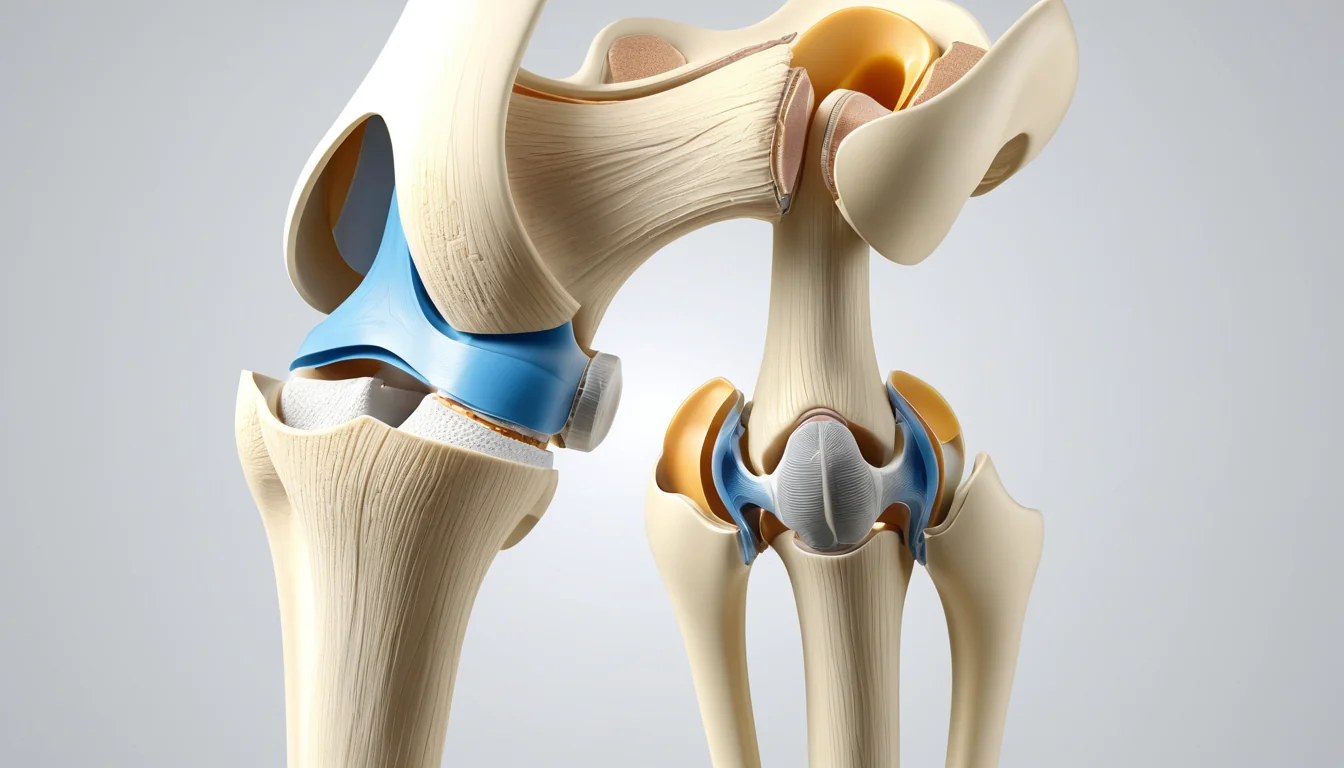
Your knee joint is held together by four main ligaments. These tough bands of tissue connect your thigh bone to your shin bone. They keep your knee stable during movement.
The two most commonly injured ligaments are the anterior cruciate ligament (ACL) and the posterior cruciate ligament (PCL). Together, they form an X-shape inside the knee — which is why they are called “cruciate,” from the Latin word for cross.
A knee ligament injury can range from a mild stretch to a complete tear. The severity of the injury determines how it is treated and how long recovery takes.
The ACL vs. the PCL
The ACL is the most frequently injured of the two cruciate ligaments. It is usually damaged by a sudden twisting motion — for example, when your feet are planted but your knee twists sharply in the opposite direction. This is common in sports like skiing, basketball, and soccer.
The PCL is typically injured by a direct blow to the knee. Car accidents and contact sports like football are common causes. The force drives the shin bone backward, stressing the PCL beyond its limits.
For more background on how the knee joint works, visit Mayo Clinic’s overview of ACL injuries.
Common Symptoms of a Knee Ligament Injury
One of the surprising facts about a knee ligament injury is that it does not always cause immediate pain. Many people describe hearing or feeling a loud “pop” in the knee at the moment of injury. After that, the knee may feel unstable or give way when you try to stand.
Swelling often develops quickly — sometimes within minutes. However, some swelling can take a few hours to appear. In addition, the knee may feel stiff and difficult to move through its full range of motion.
Signs You Should Not Ignore
Watch for these warning signs after a knee injury:
- A popping sound or sensation at the time of injury
- Rapid swelling around the knee joint
- Knee buckling or giving out when you put weight on it
- Severe pain or an inability to bend the knee
- Tenderness along the joint line
- Feeling of looseness in the joint
These symptoms can also appear with other knee injuries, such as a meniscus tear. Therefore, getting a proper diagnosis is essential before starting any treatment.
How Doctors Diagnose a Knee Ligament Injury
Diagnosing a knee ligament injury properly requires more than just an X-ray. Your doctor will start with a physical examination, carefully moving your knee through different positions to test the stability of each ligament. This hands-on assessment is a critical first step.
X-rays are useful for ruling out broken bones. However, ligaments do not show up on X-rays. As a result, your doctor will likely order additional imaging.
Imaging Tests Used in Diagnosis
An MRI (magnetic resonance imaging) scan is the gold standard for diagnosing ligament tears. It can clearly show a complete ACL or PCL rupture and reveal damage to surrounding tissues. Most provincial health plans in Canada cover medically necessary MRI scans, though wait times can vary by province.
In some cases, your doctor may recommend an arthroscopy. This is a minimally invasive procedure where a small camera is inserted into the knee joint. It is particularly useful for detecting partial meniscus tears that an MRI might miss. Arthroscopy also allows the surgeon to treat the injury during the same procedure if needed.
According to Health Canada, Canadians have access to a range of diagnostic imaging services through their provincial and territorial health programmes. Talk to your family doctor about referrals and expected timelines in your area.
Treatment Options for a Knee Ligament Injury
The right treatment for a knee ligament injury depends on several factors. These include which ligament is damaged, how severe the tear is, your age, your activity level, and your overall health goals. Treatment ranges from conservative care to reconstructive surgery.
Non-Surgical Treatment
For a partial tear or sprain, surgery is often not necessary. Your doctor or physiotherapist may recommend a structured exercise programme designed to strengthen the muscles around the knee. Stronger muscles help compensate for the weakened ligament and restore stability.
Wearing a compression brace or elastic support during physical activity can also help protect the joint while it heals. In addition, RICE therapy — Rest, Ice, Compression, and Elevation — is a useful first-aid approach in the days immediately following the injury.
Many Canadians begin their recovery journey with a physiotherapist. You can access physiotherapy through a referral from your family doctor, or directly in many provinces without a referral. Some provincial health plans cover a portion of physiotherapy costs, and extended health benefits through your employer may cover the rest.
Surgical Treatment for a Complete Tear
A complete ACL tear in an active person — especially an athlete — usually requires surgery. The goal of the operation is to restore full stability to the knee and allow a return to an active lifestyle.
During ACL reconstruction surgery, the surgeon rebuilds the torn ligament rather than simply stitching it back together. There are two main options for the replacement tissue, called a graft:
- Autograft: Tissue taken from another part of your own body, such as the patellar tendon or hamstring tendon. This is the most common approach.
- Allograft: Tissue donated from a cadaver. This avoids a second surgical site on your body and may reduce recovery time slightly.
Researchers have also tested synthetic ligament grafts, but these have not proven superior to using human tissue. Therefore, most Canadian surgeons continue to use autograft or allograft tissue for the best long-term outcomes.
Recovery After Knee Surgery
Recovery from ACL reconstruction is a significant commitment. A structured rehabilitation programme of four to six months is one of the most important parts of a successful outcome. This programme typically involves working with a physiotherapist and may include sessions at a rehabilitation centre or sports medicine facility.
During rehab, you will gradually rebuild strength, flexibility, and balance in the injured knee. The programme is progressive — meaning exercises become more challenging as your knee heals. Furthermore, some athletes may need up to 9 to 12 months before returning to competitive sport.
A successful surgery, followed by dedicated rehabilitation, can allow most patients to return to their previous level of activity. For detailed guidance on rehabilitation after knee surgery, Healthline’s ACL reconstruction recovery guide offers a helpful overview of what to expect at each stage.
When to See a Doctor
If you suspect a knee ligament injury, do not try to “walk it off.” Continuing to put weight on an unstable knee can make the injury worse and damage surrounding structures like the meniscus or cartilage.
You should see a doctor promptly if you experience any of the following after a knee injury:
- Significant swelling within the first few hours
- Inability to bear weight on the leg
- A feeling that the knee is loose or unstable
- Pain that does not improve with rest and ice after 24 to 48 hours
In Canada, you have several options for getting care. Your family doctor is a great first point of contact and can refer you to an orthopaedic specialist or physiotherapist. If you do not have a family doctor or cannot get a timely appointment, a walk-in clinic can assess your injury and arrange imaging. For severe injuries, visit your nearest emergency department.
Always consult a qualified healthcare provider before starting or changing any treatment plan. Every knee injury is different, and what works for one person may not be right for another.
Frequently Asked Questions About Knee Ligament Injuries
How do I know if I have a knee ligament injury?
Common signs of a knee ligament injury include hearing a pop at the time of injury, rapid swelling, and a feeling that your knee is unstable or giving out. However, some ligament injuries cause little pain at first, so it is important to see a doctor for a proper diagnosis even if the discomfort seems manageable.
Can a knee ligament injury heal without surgery?
Yes — a partial knee ligament injury or sprain can often heal with rest, physiotherapy, and a strengthening exercise programme. However, a complete ACL tear in an active individual usually requires surgical reconstruction for a full return to activity. Your doctor will recommend the best approach based on the severity of your injury and your lifestyle.
How long does recovery from a knee ligament injury take?
Recovery time depends on the type and severity of the knee ligament injury. A mild sprain may heal in a few weeks with rest and physiotherapy. After ACL reconstruction surgery, most people need four to six months of rehabilitation before returning to everyday activities, and up to nine to twelve months before returning to competitive sport.
Is ACL surgery covered by provincial health plans in Canada?
In most Canadian provinces, ACL reconstruction surgery performed in a hospital setting is covered under provincial health insurance when it is deemed medically necessary. However, associated costs such as private physiotherapy, knee braces, and rehabilitation equipment may not be fully covered. Check with your provincial health plan and your extended health benefits provider for details specific to your situation.
What is the difference between an ACL tear and a PCL tear?
Both are types of knee ligament injury, but they involve different structures and mechanisms. The ACL is usually torn by a sudden twisting motion and is the more commonly injured ligament. The PCL is typically damaged by a direct impact to the front of the knee, such as in a car accident or a tackle in contact sports.
Can I prevent a knee ligament injury?
According to Mayo Clinic’s overview of ACL injuries, this information is supported by current medical research.
For more information, read our guide on differences between MRI and CT scan for diagnosis.
While no prevention method is foolproof, you can reduce your risk of a knee ligament injury by maintaining strong leg muscles, using proper technique during sports and exercise, and warming up thoroughly before physical activity. Wearing appropriate footwear and using proper protective equipment during contact sports also lowers your risk significantly.
Key Takeaways
- A knee ligament injury affects the tough bands of tissue that stabilise your knee joint, with the ACL and PCL being most commonly damaged.
- Symptoms include a popping sensation, rapid swelling, and an unstable or buckling knee — though pain is not always immediate.
- Diagnosis involves a physical exam, MRI imaging, and sometimes arthroscopy to detect partial tears.
- Partial tears may heal with physiotherapy and bracing, while complete ACL tears in active individuals often require surgical reconstruction.
- Recovery after surgery involves a four-to-six month rehabilitation programme and may take up to a year for athletes returning to competitive sport.
- If you suspect a knee ligament injury, see your family doctor, visit a walk-in clinic, or go to the emergency department for severe injuries — do not delay care.
- Always speak with a qualified healthcare professional before making decisions about your treatment plan.
Frequently Asked Questions
What is a knee ligament injury?
A knee ligament injury occurs when one or more of the four main knee ligaments — ACL, PCL, MCL, or LCL — are stretched, partially torn, or completely ruptured. These injuries are common in sports and accidents, causing instability, pain, and reduced knee function. Severity is graded from Grade 1 (mild sprain) to Grade 3 (complete tear).
What are the symptoms of a knee ligament injury?
Common symptoms include sudden sharp pain at the time of injury, immediate swelling, a popping or snapping sensation, knee instability or buckling, and difficulty bearing weight. Bruising around the joint may also develop. Symptoms vary depending on which ligament is affected and the severity of the tear.
How is a knee ligament injury treated in Canada?
Treatment depends on severity. Mild injuries are managed with rest, ice, compression, and elevation (RICE), along with physiotherapy. Severe tears, particularly ACL ruptures, may require surgical reconstruction. Most Canadians access treatment through their family doctor, who may refer them to an orthopaedic surgeon or sports medicine specialist.
Can you prevent knee ligament injuries during sports?
Yes. Prevention strategies include strengthening the quadriceps and hamstrings, practicing proper landing and pivoting techniques, wearing supportive footwear, and completing sport-specific warm-up programs like FIFA 11+. Neuromuscular training programs have been shown to significantly reduce ACL and other knee ligament injury rates in athletes.
When should you see a doctor for a knee ligament injury?
See a doctor immediately if you experience severe pain, significant swelling within hours of injury, a noticeable popping sound, inability to bear weight, or your knee feels unstable or locked. Prompt evaluation ensures accurate diagnosis through physical examination and imaging, and prevents long-term joint damage or chronic instability.

About the Author
Dr. Michael Ross, MD, FRCSCDr. Michael Ross is a fellowship-trained orthopedic surgeon at the University of Alberta Hospital, specializing in joint replacement and sports medicine. A Fellow of the Royal College of Surgeons of Canada (FRCSC), he has over 18 years of surgical experience and has authored multiple textbook chapters on musculoskeletal health. Dr. Ross is passionate about patient education and evidence-based medicine.
View all articles →