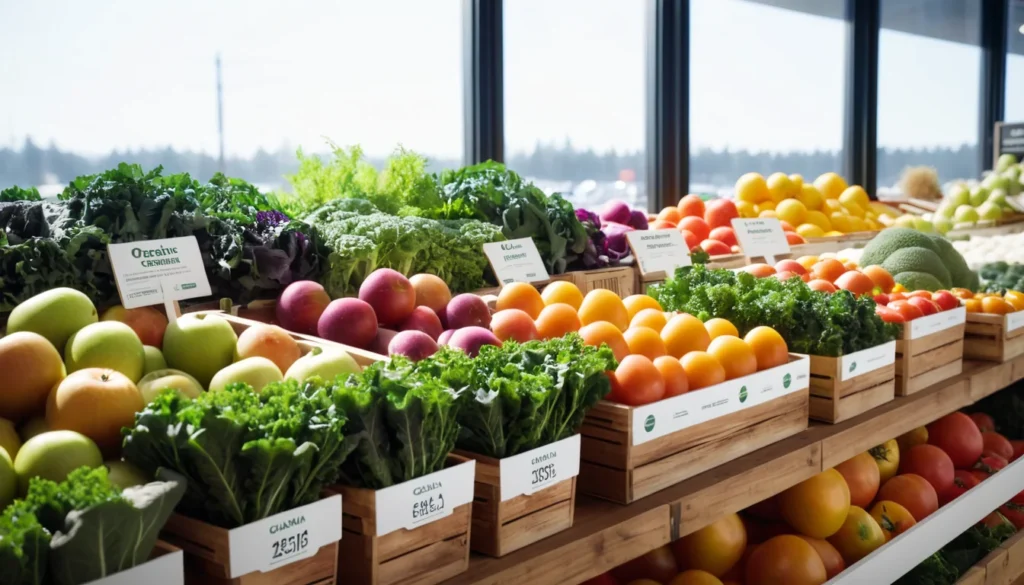
Organic food Canada shoppers are choosing more often has become one of the most talked-about topics in healthy eating nationwide. From grocery store shelves to local farmers’ markets, Canadians are increasingly curious about what the organic label really means and whether it is worth the extra cost.
Why Organic Food Canada Shoppers Choose Matters for Your Health
Understanding the benefits of organic food starts with knowing how it is grown and regulated. This article breaks down Canadian organic standards, what the latest research says about nutrition and pesticide exposure, and how to make informed choices that work for you and your family.
What Is Organic Food?
Types of Organic Food Certifications and Labels Available in Canada for Organic Food Canada Consumers
| Certification Type | Characteristics | What It Means for Your Health | How to Identify |
|---|---|---|---|
| Canada Organic Biologique (Federal) | Regulated under Canada’s Organic Products Regulations; requires 95% or more organic ingredients; prohibits synthetic pesticides, GMOs, and irradiation | Reduced exposure to synthetic pesticide residues; no genetically modified organisms; supports gut microbiome health | Look for the Canada Organic logo (green leaf symbol) on packaging |
| Provincial Organic Certification (e.g., Pro-Cert, OCPP) | Meets or exceeds federal Canadian Organic Standards; administered by accredited certification bodies across provinces | Equivalent health protections to federal certification; may include stricter regional soil and water standards benefiting produce quality | Certification body name and number printed on label alongside Canada Organic logo |
| USDA Organic (Imported) | Recognized as equivalent to Canadian organic standards under a bilateral agreement; covers imported US produce and packaged goods | Same pesticide-free and non-GMO assurances as Canadian certified organic; safe for individuals with chemical sensitivities | USDA Organic seal displayed; may also carry Canada Organic logo when sold domestically |
| “Made with Organic Ingredients” | Contains 70–94% certified organic ingredients; remaining ingredients must still comply with permitted substance lists | Partial reduction in pesticide and additive exposure; beneficial for budget-conscious consumers transitioning to organic diets | No Canada Organic logo permitted; claim stated in ingredient list or front-of-package text only |
| Transitional Organic | Farm is in a mandatory 3-year chemical-free transition period before receiving full organic certification under Canadian regulations | Progressively lower pesticide residue levels; soil quality improving; comparable nutritional benefits emerging during transition | Labelled as “transitional organic”; not eligible for the Canada Organic logo until full certification is achieved |
The word “organic” refers to the way food is grown and processed on the farm. In Canada, organic products must meet strict federal standards to carry the organic label. These standards are overseen by Health Canada and the Canadian Food Inspection Agency.
For a crop to be certified organic, it must be grown in soil free of added synthetic chemicals. Farmers cannot use synthetic pesticides, petroleum-based fertilisers, or sewage sludge on their fields. In addition, genetically modified organisms (GMOs) are not permitted in certified organic products.
What Are GMOs?
GMOs are plants or animals whose DNA has been altered in a laboratory. Scientists change their genetic makeup to produce certain traits, like resistance to insects or drought. Long-term studies on GMOs in humans are still limited, so their full health effects are not yet completely understood.
Organic standards also apply to animals raised for meat, dairy, or eggs. Organically raised animals must have access to outdoor space and be fed organic feed. They cannot be given antibiotics, growth hormones, or feed made from other animals.
Is Organic Food More Nutritious?
This is one of the most common questions Canadians ask about organic food. The honest answer is: the research is mixed. Some studies suggest that organically grown fruits and vegetables may contain slightly higher levels of vitamin C, minerals, phytonutrients, and antioxidants compared to conventionally grown produce.
However, other analyses have found no significant nutritional difference between organic and non-organic foods. According to the Mayo Clinic’s guidance on organic food, the nutritional differences are generally small. More large-scale, long-term studies are still needed before we can draw firm conclusions.
Therefore, choosing organic may offer some nutritional benefits, but eating plenty of fruits and vegetables — organic or not — remains the most important step for good health.
Key Benefits of Organic Food
Even if the nutritional differences are modest, organic food offers several other meaningful advantages. Many Canadians choose organic for reasons beyond nutrition alone.
Fewer Pesticide Residues
Conventionally grown crops often use synthetic pesticides — including fungicides, herbicides, and insecticides. Residues from these chemicals can remain on food by the time it reaches your plate. Organic farming significantly reduces your exposure to these residues.
Pesticide exposure is a particular concern for young children and developing fetuses. Their immune systems and brains are still growing, making them more vulnerable. Early exposure to pesticides has been linked to developmental delays, behavioural problems, and motor dysfunction.
For pregnant women, pesticides add extra stress to organs that are already working harder than usual. Some pesticides can pass from mother to baby through the placenta or through breast milk after birth. In some cases, effects on the nervous system may not appear until years after initial exposure.
Most adults carry some level of pesticide residue in their bodies after years of eating conventionally grown food. This buildup has been associated with headaches, a weakened immune system, and in some studies, birth defects.
Often Fresher and Better Tasting
Because organic food contains no synthetic preservatives, it does not stay shelf-stable as long as conventional products. As a result, organic produce is often grown on smaller local farms and sold closer to where it was harvested. Many Canadians find that locally grown organic food tastes noticeably fresher.
Better for the Environment
Organic farming practices reduce pollution in the soil, water, and air. They also help prevent soil erosion and improve long-term soil fertility. Furthermore, organic farms use less energy overall compared to conventional industrial farming operations.
Avoiding synthetic pesticides also protects birds, bees, and other small animals. Many pesticides interfere with reproduction in wildlife and can be fatal in high concentrations. Choosing organic food supports farming methods that are kinder to the broader ecosystem.
Reduced Antibiotic Resistance Risk
Overuse of antibiotics in conventionally raised livestock is a serious public health concern. When animals are routinely given antibiotics, bacteria can develop resistance. This makes those antibiotics less effective when humans need them to fight infection.
Organically raised animals are not given antibiotics or growth hormones. They also have more space and access to the outdoors, which naturally reduces stress and the spread of disease among animals.
How Organic Farming Works
Organic farming is a complete system of food production — not just the absence of chemicals. It relies on biodiversity and natural processes to manage pests and maintain soil health. For example, organic farmers may use crop rotation, composting, and beneficial insects to protect their fields.
This approach is designed to work with nature rather than against it. Organic farming maintains healthier ecosystems on and around the farm. It also tends to support smaller, local operations, which can strengthen regional food systems across Canadian provinces.
For animal products, organic farming means providing animals with conditions that match their natural behaviours. Animals have room to roam, access to fresh air, and a diet free from synthetic additives. This benefits the animals and may also reduce the risk of food-borne illness for consumers.
Understanding Organic Labels in Canada
In Canada, a product can only display the Canada Organic logo if it contains at least 95% certified organic ingredients. Products with 70–95% organic ingredients may say “contains X% organic ingredients” but cannot use the main logo. Anything below 70% organic cannot make any organic claims on the front of the package.
It is worth noting that “natural” does not mean the same thing as “organic.” Natural is not a regulated term in Canada, so it can appear on many products that were grown or raised using conventional methods. Always look for the certified organic seal to be sure.
Prices for organic food are often noticeably higher than for conventional products. This reflects the higher cost of organic farming methods, certification requirements, and smaller production volumes. If budget is a concern, prioritising organic for items known to carry higher pesticide residues — like strawberries, spinach, and apples — can be a smart compromise.
When to Talk to Your Doctor
If you have questions about whether organic food is the right choice for your health situation, your family doctor is a great place to start. This is especially important if you are pregnant, have young children, or manage a health condition that affects your diet. Your doctor can help you weigh the benefits based on your personal health history.
If you do not have a family doctor, a walk-in clinic can provide basic nutritional guidance and referrals. Many provincial health plans cover consultations with a registered dietitian when referred by a physician. Do not hesitate to use these resources — that is exactly what they are there for.
Frequently Asked Questions About Organic Food
Is organic food actually healthier than conventional food?
Some studies suggest organic food may contain slightly more antioxidants and certain nutrients, but the overall nutritional differences are small. The bigger benefit of organic food is lower pesticide residue exposure. Eating a diet rich in fruits and vegetables — organic or not — is still the most important factor for good health.
Why is organic food so expensive in Canada?
Organic food costs more because organic farming is more labour-intensive and has stricter certification requirements. Smaller production volumes also mean higher costs per unit compared to large conventional farms. However, buying seasonal, local organic produce and prioritising high-pesticide items can help manage costs.
What does the Canada Organic label actually mean?
The Canada Organic logo means the product contains at least 95% certified organic ingredients, verified by an accredited certifying body. The product must be grown or raised without synthetic pesticides, GMOs, artificial fertilisers, or prohibited substances. This label is regulated by the Canadian Food Inspection Agency and Health Canada.
Should children eat organic food?
Children are more vulnerable to pesticide exposure because their brains and immune systems are still developing. Choosing organic food for young children — especially high-pesticide fruits and vegetables — may help reduce their overall pesticide intake. Talk to your family doctor or a registered dietitian for personalised advice for your child.
Does organic food have GMOs?
No — certified organic food in Canada cannot contain genetically modified organisms (GMOs). This is one of the core requirements of Canada’s organic certification standards. If avoiding GMOs is important to you, choosing certified organic products is one reliable way to do so.
Which organic foods are worth buying first?
According to Health Canada’s guidelines on organic food safety, this information is supported by current medical research.
For more information, read our guide on food allergies and how they affect Canadian families.
If your budget is limited, focus on organic versions of produce known to carry the most pesticide residue, such as strawberries, spinach, apples, grapes, and bell peppers. Items with thick skins you do not eat — like avocados or pineapples — tend to have lower residue levels in conventional form. The Healthline guide on pesticides and food offers a helpful breakdown of higher and lower risk produce.
Key Takeaways
Organic food is grown without synthetic pesticides, GMOs, artificial fertilisers, or antibiotics.
In Canada, the organic label is regulated — look for the Canada Organic logo to be sure.
Research on nutritional differences is mixed, but organic food does reduce pesticide exposure.
Children, pregnant women, and people with chemical sensitivities may benefit most from choosing organic.
Organic farming is better for the environment — it protects soil, water, air, and wildlife.
If cost is a barrier, prioritise organic for high-pesticide produce like strawberries, apples, and spinach.
Talk to your family doctor or a registered dietitian for personalised advice about your diet and health.
Frequently Asked Questions
What is organic food in Canada?
Organic food in Canada refers to products grown or processed without synthetic pesticides, chemical fertilizers, or genetically modified organisms. To be certified organic in Canada, products must meet strict Canadian Organic Standards regulated by the Canadian Food Inspection Agency (CFIA) and display the Canada Organic logo.
Is organic food Canada healthier than conventional food?
Research suggests organic food may contain higher levels of certain antioxidants and lower pesticide residues than conventionally grown food. However, Health Canada states nutritional differences are modest. Organic food reduces exposure to synthetic chemicals, which may benefit vulnerable populations including children, pregnant women, and immunocompromised individuals.
What are the benefits of eating organic food?
Eating organic food may reduce exposure to harmful pesticide residues, synthetic hormones, and antibiotics. Potential benefits include lower risk of pesticide-related health effects, support for gut microbiome health, and reduced environmental toxin exposure. Organic produce also supports sustainable farming practices that protect long-term environmental and public health.
How can Canadians identify and prevent pesticide exposure from food?
Canadians can reduce pesticide exposure by choosing certified organic produce, especially for high-residue items like strawberries, spinach, and apples. Thoroughly washing all fruits and vegetables, peeling when possible, and diversifying your diet also helps minimize cumulative pesticide intake and associated long-term health risks.
When should Canadians see a doctor about diet-related health concerns from food?
Canadians should consult a doctor or registered dietitian if they experience persistent digestive issues, unexplained allergic reactions, fatigue, or hormonal disruptions potentially linked to food choices. Healthcare providers can assess whether dietary changes, including switching to organic food, are appropriate based on your individual health needs and medical history.