HIV From Kissing: What Canadians Should Know (2026)

Share
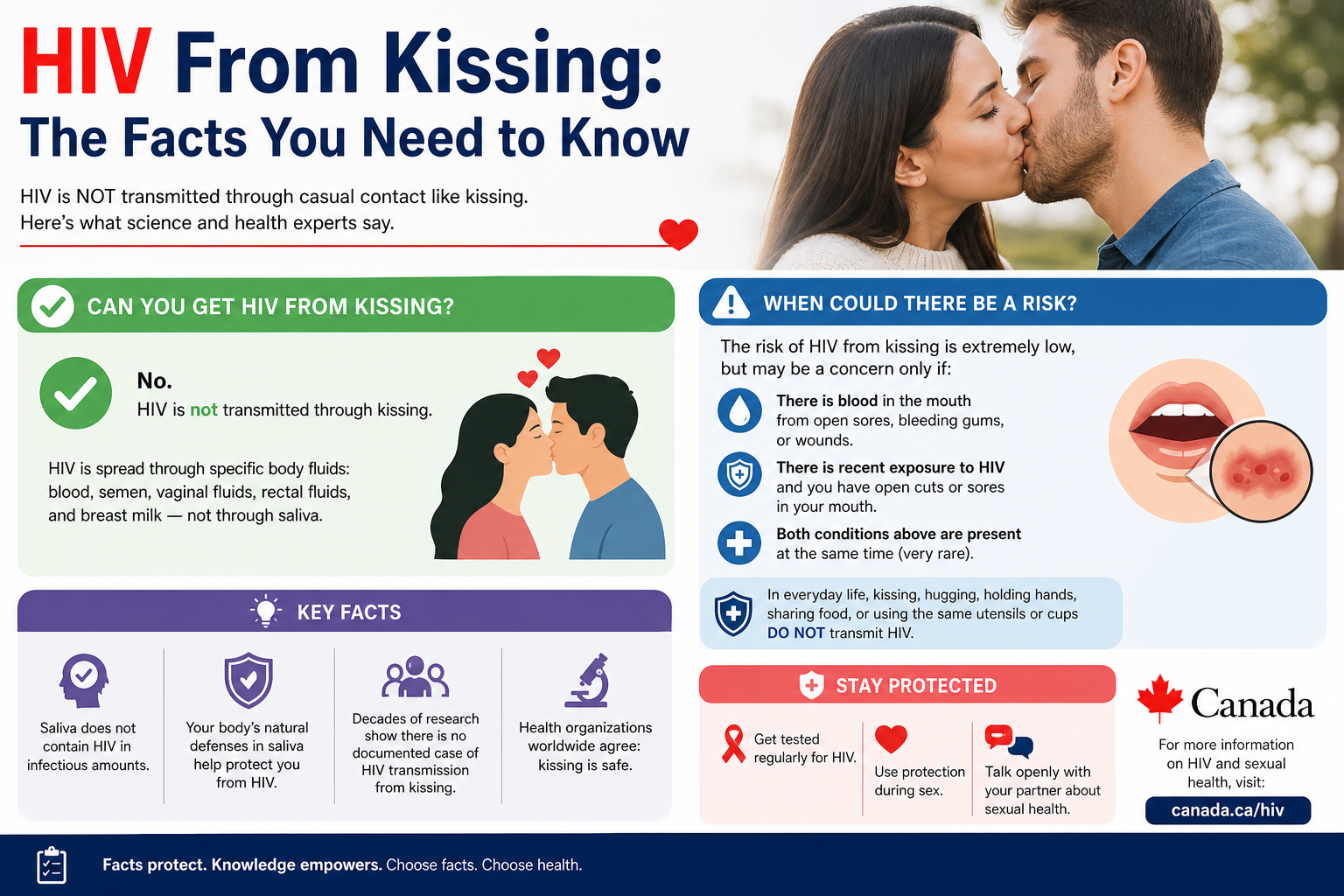
Can you get HIV from kissing someone who is HIV-positive? This is one of the most common questions Canadians have about HIV transmission, and the short answer is no. HIV does not spread through saliva, and kissing — even a deep, open-mouth kiss — does not put you at risk of infection.
Can You Get HIV From Kissing? The Science-Backed Answer
Understanding how HIV actually spreads is essential for protecting your health and reducing the stigma that still surrounds the virus. Whether you are wondering about HIV transmission through kissing, sexual contact, or other forms of exposure, this guide covers everything Canadians need to know — including where to access HIV testing in Canada and how to take advantage of prevention resources available across the country.
What Is HIV?
HIV stands for Human Immunodeficiency Virus. It attacks specific white blood cells in your immune system — the cells your body relies on to fight off infections and disease.
When HIV infects these cells, it turns them into factories that produce more copies of the virus. Over time, those infected cells die. As a result, the number of healthy immune cells in your body slowly drops, leaving you more vulnerable to illness.
Without treatment, HIV can progress to AIDS (Acquired Immunodeficiency Syndrome). However, with modern medication, people living with HIV in Canada can lead long, healthy lives. Health Canada continues to support HIV prevention, testing, and treatment programmes across the country.
Can You Get HIV From Kissing? The Clear Answer
No — you cannot get HIV from kissing. HIV cannot survive in saliva. Even though tiny amounts of the virus may be present in saliva, the concentration is far too low to cause infection.
For HIV to infect someone, a sufficient amount of the virus must enter the bloodstream directly. Saliva simply does not carry enough of the virus to make that happen.
Why Saliva Does Not Transmit HIV
Saliva is not just water. It contains proteins and enzymes that play important roles in digestion, lubrication, and fighting off germs that enter your mouth.
One enzyme found in saliva is called SLPI (Secretory Leukocyte Protease Inhibitor). SLPI actively blocks HIV from infecting the types of immune cells — called monocytes and T-cells — that the virus normally targets. This is a key reason why HIV cannot spread through a kiss.
Furthermore, the mucous membranes inside your mouth are different from those in the vagina or rectum. The tissues in the mouth are much more resistant to HIV. In contrast, rectal and vaginal tissues are thinner and more prone to tiny tears that can allow the virus to enter the body.
The One Rare Exception
In extremely rare cases, deep kissing could theoretically carry a very small risk. This would only apply if both people had open, bleeding sores or wounds in their mouths at the same time, and the HIV-positive person’s blood made direct contact with the HIV-negative person’s blood.
This scenario is considered so unlikely that health authorities, including the World Health Organization (WHO), do not classify kissing as a route of HIV transmission.
How HIV Actually Spreads
HIV spreads only through direct contact with certain body fluids from a person who has the virus. Knowing which fluids carry HIV helps you understand the real risks.
The body fluids that can transmit HIV are:
- Blood
- Semen and pre-seminal fluid
- Rectal fluids
- Vaginal fluids
- Breast milk
These fluids must come into contact with a mucous membrane, damaged tissue, or be injected directly into the bloodstream for transmission to occur.
Sexual Transmission
The most common way HIV spreads in Canada is through unprotected sexual contact. Anal sex carries the highest risk, because rectal tissue is delicate and can tear easily. Vaginal sex also carries a significant risk without protection.
Oral sex carries a much lower risk, but it is not completely zero — especially if there are open sores present. Using a condom correctly and consistently is one of the most effective ways to prevent HIV during sex.
It is also worth knowing that people living with HIV who take their medication properly can reach an “undetectable” viral load. According to current evidence, an undetectable viral load means they cannot transmit the virus to a sexual partner. This is known as U=U (Undetectable = Untransmittable).
Sharing Needles or Syringes
HIV can survive in a used needle for up to 42 days. Sharing needles, syringes, or other drug-use equipment is therefore a serious risk for HIV transmission. This also applies to unsterilised tattooing or piercing equipment.
If you or someone you know uses injection drugs, many Canadian communities offer needle exchange programmes. These programmes provide clean supplies and connect people to health support without judgement.
Pregnancy, Birth, and Breastfeeding
HIV can pass from a mother to her baby during pregnancy, childbirth, or breastfeeding. Without any treatment, the WHO estimates this risk ranges from 15% to 45%.
However, effective HIV treatment during pregnancy brings that risk down to around 5% or lower. If you are pregnant and have questions about HIV testing, speak with your family doctor or midwife as soon as possible.
How HIV Does NOT Spread
HIV is a fragile virus. It cannot survive for long outside the human body. Therefore, everyday contact with someone who has HIV carries no risk at all.
You cannot get HIV from:
- Kissing or hugging
- Sharing food, drinks, or utensils
- Coughing or sneezing
- Air or water
- Mosquitoes, ticks, or other insects
- Saliva, tears, or sweat (unless mixed with infected blood)
- Touching doorknobs, toilet seats, or other surfaces
- Scratches or bites from a person with HIV
- Shaking hands or casual skin contact
HIV does not spread through casual, everyday interactions. People living with HIV can safely share meals, workplaces, and close friendships with others.
HIV Prevention in Canada
Canada has strong public health resources to help prevent HIV and support those living with the virus. Prevention strategies include:
- Using condoms correctly every time during sex
- PrEP (Pre-Exposure Prophylaxis) — a daily medication for HIV-negative people at higher risk. Ask your doctor if PrEP is right for you. Coverage varies by province, so check your provincial health plan.
- PEP (Post-Exposure Prophylaxis) — an emergency medication taken within 72 hours of a potential HIV exposure. Go to a walk-in clinic or emergency room right away if you think you’ve been exposed.
- Regular HIV testing — knowing your status and your partner’s status is a key part of sexual health
- Harm reduction programmes — including needle exchanges available in most Canadian cities
For more information, Mayo Clinic’s HIV/AIDS overview is a trusted resource for understanding the virus in plain language.
When to See a Doctor
If you are concerned about a possible HIV exposure, do not wait. Time matters — especially if you are considering PEP, which must be started within 72 hours.
You can speak with your family doctor, visit a walk-in clinic, or go to your local sexual health centre. Many provinces also offer free, confidential HIV testing at community health centres. You do not need a referral in most cases.
Regular HIV testing is recommended for anyone who is sexually active, especially if you have multiple partners or engage in higher-risk behaviours. Testing is quick, simple, and covered under most provincial health plans. There is no reason to put it off.
If you have recently received an HIV diagnosis, please reach out to a healthcare provider right away. Early treatment makes a significant difference in long-term health outcomes. You are not alone — support services are available across Canada.
Frequently Asked Questions
Can you get HIV from kissing with tongue?
No, you cannot get HIV from kissing, including deep or “French” kissing. HIV cannot survive in saliva, and the concentration of the virus in saliva is far too low to cause infection. Even tongue kissing does not put you at risk for HIV transmission.
Can HIV be transmitted through saliva?
HIV is present in saliva in extremely small amounts — not enough to transmit the virus. Saliva also contains enzymes like SLPI that actively block HIV from infecting immune cells. Therefore, saliva is not considered a route of HIV transmission.
What are the main ways HIV spreads?
HIV spreads through specific body fluids: blood, semen, pre-seminal fluid, rectal fluids, vaginal fluids, and breast milk. The most common routes of transmission are unprotected sexual contact and sharing needles. HIV can also pass from mother to baby during pregnancy, birth, or breastfeeding.
How long can HIV survive outside the body?
HIV is a fragile virus and does not survive long outside the human body. It cannot be spread through air, water, or touching surfaces. However, HIV can survive in a used needle for up to 42 days, which is why sharing needles is a significant risk.
Where can I get an HIV test in Canada?
You can get tested for HIV through your family doctor, a walk-in clinic, or a sexual health centre. HIV testing is confidential and covered under most provincial health plans across Canada. Many community health centres also offer free and anonymous testing options.
What should I do if I think I was exposed to HIV?
According to Government of Canada’s HIV/AIDS resource page, this information is supported by current medical research.
For more information, read our guide on best extracurricular activities for children with ADHD.
If you believe you were exposed to HIV, seek medical help immediately — do not wait. PEP (Post-Exposure Prophylaxis) is an emergency medication that can prevent HIV infection, but it must be started within 72 hours of exposure. Visit a walk-in clinic or emergency room right away and explain the situation to the healthcare provider.
For a complete overview, read our guide: HIV and AIDS in Canada: Complete Guide.
Key Takeaways
- You cannot get HIV from kissing. HIV does not survive in saliva, and saliva contains enzymes that block the virus.
- HIV spreads through specific body fluids — blood, semen, vaginal fluids, rectal fluids, and breast milk.
- The most common transmission routes are unprotected sex and sharing needles.
- Everyday contact is safe. Hugging, sharing food, or casual skin contact cannot spread HIV.
- PrEP and PEP are effective medications available in Canada to prevent HIV — ask your doctor or pharmacist about coverage under your provincial health plan.
- Regular testing matters. Knowing your HIV status is a key part of staying healthy and protecting your partners.
- Always consult your doctor or visit a walk-in clinic if you have concerns about HIV exposure or want to discuss prevention options tailored to your situation.

About the Author
Dr. James Okafor, MD, PhDDr. James Okafor holds an MD and PhD in Neurological Sciences from McGill University. With 12 years of experience in clinical neurology and mental health research, he has contributed to landmark studies on depression, anxiety, and cognitive health. Dr. Okafor is a Fellow of the Royal College of Physicians and Surgeons of Canada and serves on the editorial board of two peer-reviewed journals.
View all articles →